Island Info

villa in nusa lembongan, property management in nusa lembongan, the lembongan traveller

Why Villa Owners in Nusa Lembongan Need a Property Management Company

Why Villa Owners in Nusa Lembongan Need a Property Management Company

Owning a villa in Nusa Lembongan sounds like the dream — and it can be. But once your villa becomes a holiday rental, there is much more involved than simply putting it on an OTA and waiting for bookings.

From marketing and reservations to guest communication, housekeeping, maintenance and pricing, running a successful holiday villa is a full-time job.

That’s where a professional property management company in Nusa Lembongan can make all the difference.

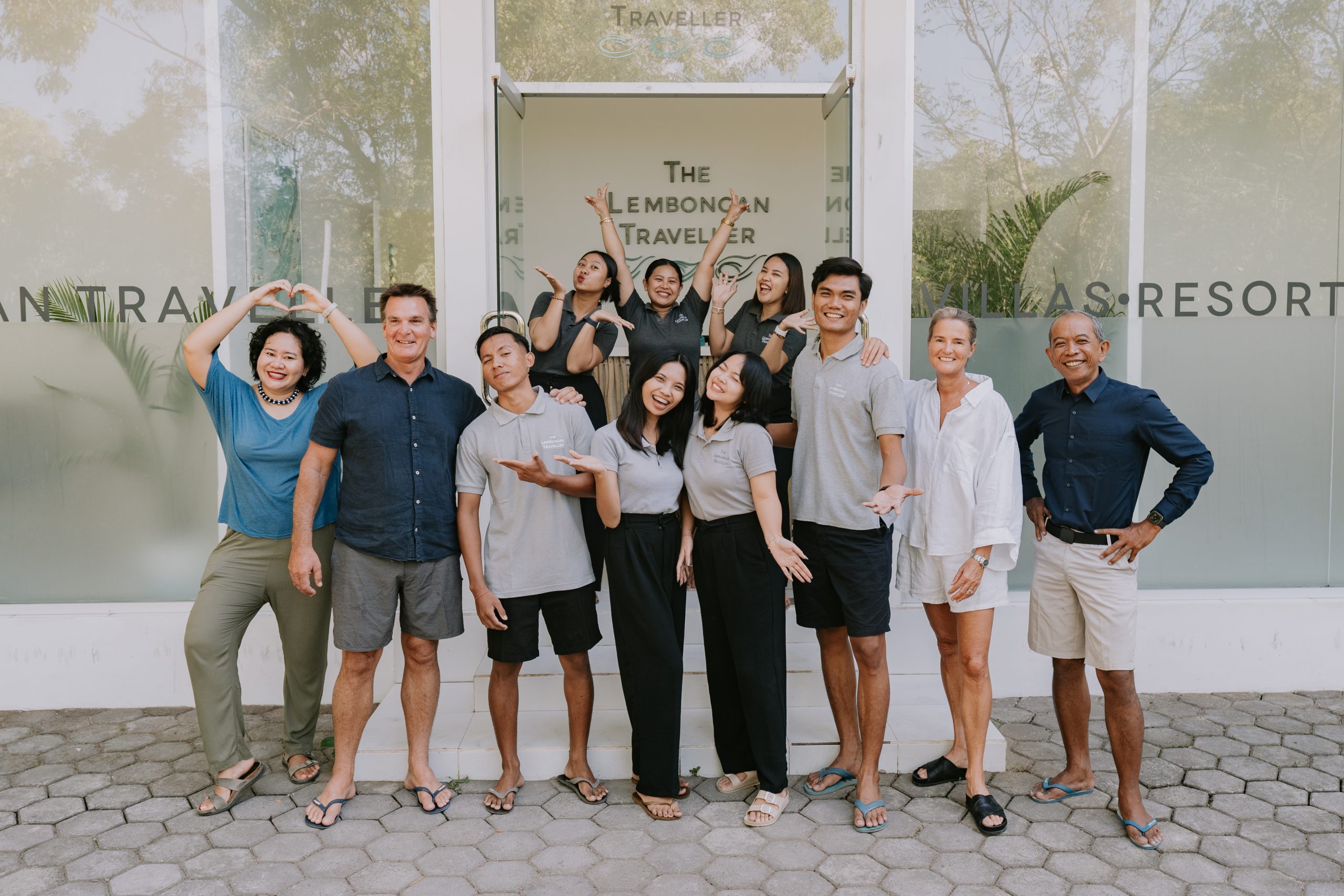
At The Lembongan Traveller, we help villa owners take the day-to-day work off their hands while making sure their property is professionally presented, well cared for and positioned to attract the right guests.

Your Villa Needs More Than Just a Listing

villa in nusa lembongan, property management in nusa lembongan, the lembongan traveller

Having your villa listed on OTAs like Airbnb or Booking.com is only the beginning.

A successful holiday rental needs professional photography, compelling descriptions, accurate information, competitive pricing and consistent visibility across booking channels. More importantly, your listing needs to be actively managed as the market changes.

A property management company can take care of this ongoing work, helping your villa stay competitive rather than simply sitting online waiting for bookings.

At The Lembongan Traveller, we combine property management, holiday bookings and island expertise to promote properties to travellers specifically looking to stay in Nusa Lembongan.

You Need Someone on the Island

villa in nusa lembongan, property management in nusa lembongan, the lembongan traveller

This is particularly important when your villa is in Nusa Lembongan.

If you live overseas or spend most of your time in Bali or elsewhere, who is going to deal with a leaking tap, a broken air conditioner or a guest arriving late at night?

Having a trusted local team means there is someone on the ground who understands the island, knows reliable suppliers and can respond when something needs attention.

It also gives you access to the local talent pool. Hiring in Nusa Lembongan can be challenging when you don’t live here with no established local connections. A property management company with an existing team and network can help you find reliable housekeeping, maintenance and other hospitality staff without having to start from scratch.

Guest Experience Is Everything

villa in nusa lembongan, property management in nusa lembongan, the lembongan traveller

Beautiful villas get people to click Book.

Great experiences get them to leave five-star reviews and come back.

Guest communication starts well before arrival. Guests may need help organising boat transfers, arranging airport transport, booking activities, understanding where to eat or simply figuring out how to get around the island.

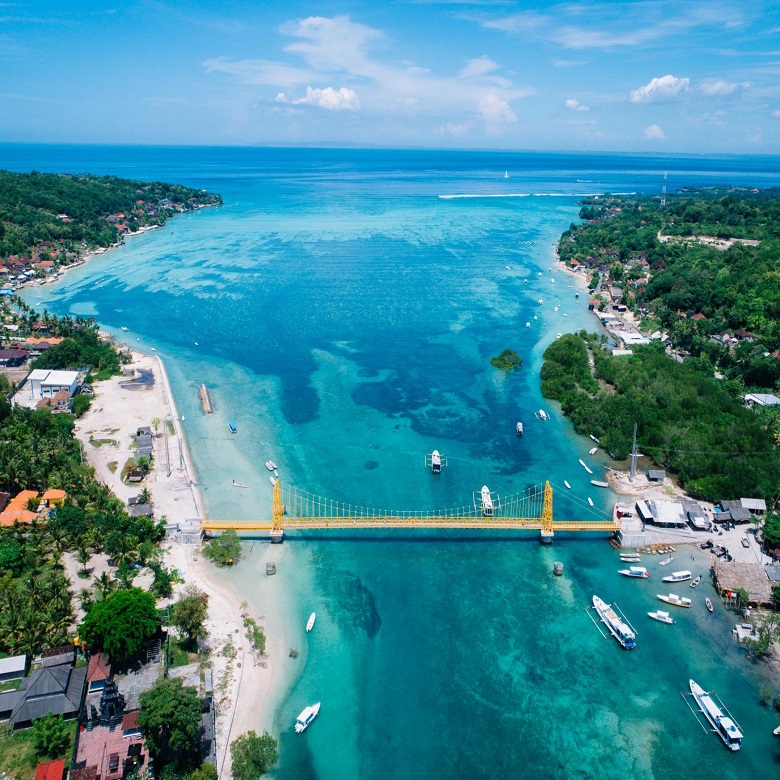
This is where local knowledge really matters. Your team can tell guests which beaches are actually suitable for swimming, where to go for sunset or the best way to get around — including little details visitors may not know, such as the fact that golf buggies can’t cross the Yellow Bridge.

These small details make a big difference to the guest experience and help prevent confusion during their stay.

Housekeeping & Maintenance Can’t Be an Afterthought

villa in nusa lembongan, property management in nusa lembongan, the lembongan traveller

A villa is only as good as its upkeep.

Pool cleaning, gardens, linen, housekeeping, air conditioning, plumbing, electrical issues and general repairs all need regular attention — especially in a tropical island environment.

Small maintenance issues can quickly become expensive problems if they aren’t noticed early.

Professional management means your property is regularly monitored and issues can be addressed before they affect your guests or your reviews.

It also means having an established network of local suppliers and tradespeople who can help keep your property running smoothly.

Pricing Should Change With Demand

villa in nusa lembongan, property management in nusa lembongan, the lembongan traveller

One of the biggest mistakes villa owners can make is setting one nightly rate and leaving it there.

Holiday rental pricing should respond to seasonality, demand, holidays, school breaks, availability and booking patterns.

Nusa Lembongan has clear periods of high and low demand, so your pricing strategy needs to work across the entire year — not just during July and August.

A professional manager can adjust rates and promotional strategies to help maximise both occupancy and revenue, rather than simply chasing bookings at any price.

You Get Access to a Local Booking Network

villa in nusa lembongan, property management in nusa lembongan, the lembongan traveller

One major advantage of working with an established property management company is that your villa doesn’t have to rely entirely on third-party booking platforms.

The Lembongan Traveller has been part of the Nusa Lembongan tourism industry for years, with an established website, traveller audience, local knowledge and network of island businesses.

This gives your property another channel for generating direct enquiries and bookings, while also connecting it with travellers who are already planning a Nusa Lembongan holiday. As an owner, you profit more from direct booking as you don’t need to pay additional 15 – 20% commission from online booking platforms.

You Can Enjoy Your Investment Without Running the Business

villa in nusa lembongan, property management in nusa lembongan, the lembongan traveller

Perhaps the biggest benefit is simple:

You don’t have to become a hotelier just because you own a villa.

Many villa owners purchase their property because they love Nusa Lembongan and want a home they can enjoy themselves — with the opportunity to generate income when they’re away.

Managing the property yourself can quickly turn that dream into another job.

A professional property management company takes care of the operational side, allowing you to stay involved as much or as little as you want.

And it’s not just the physical running of the villa. Your PMC can also help coordinate the administrative side, including liaising with your tax consultant and providing the information needed for your property’s financial and tax requirements.

At the same time, your villa becomes part of the island’s wider economy — supporting local employment and a chain of local suppliers, tradespeople and businesses.

You can enjoy your villa when you’re on the island, while having a local team looking after it when you’re not.

So, Is Property Management Worth It?

villa in nusa lembongan, property management in nusa lembongan, the lembongan traveller

For villa owners who live overseas, have limited time, don’t have an established local team or simply don’t want to manage the day-to-day running of a holiday rental, professional property management can be a smart investment.

The right management company should do more than answer guest messages.

They should help market your villa, generate bookings, protect your property, manage your guests, access local talent, coordinate suppliers and help navigate the practicalities of owning a villa on the island.

Why Choose The Lembongan Traveller?

villa in nusa lembongan, property management in nusa lembongan, the lembongan traveller

Managing a villa in Nusa Lembongan requires more than generic Bali property management.

You need people who actually understand the island, the guests, the market and the businesses around you.

The Lembongan Traveller combines local island knowledge with holiday rental marketing, reservations, guest services and property management — giving villa owners one local team to manage the moving parts.

You own the villa. We help you make it work.

If you own a villa in Nusa Lembongan and are considering professional property management, get in touch with The Lembongan Traveller to discuss how we can help maximise your property’s potential.

Email: CEO@thelembongantraveller.com

tropica tranquility

Affordable Stays in Nusa Lembongan: Discover Tropica Tranquility and Gecko Villa & Bungalows

Affordable Stays in Nusa Lembongan: Discover Tropica Tranquility and Gecko Villa & Bungalows

Planning a Nusa Lembongan getaway doesn’t have to mean choosing between comfort and budget. Whether you’re a couple looking for a peaceful island escape, a family travelling together, or a group of friends wanting a tropical home base, there are plenty of affordable stays in Nusa Lembongan that offer charm, convenience, and a true island experience.

Located in the heart of Jungutbatu, two of our favourite boutique stays — Tropica Tranquility and Gecko Villa & Bungalows — offer the perfect balance of comfort, location, and value. Just a short walk or ride from the beach, cafes, and restaurants, both properties make exploring the island easy while giving you a relaxing place to unwind after a day of adventure.

Tropica Tranquility: A Peaceful Boutique Escape in Jungutbatu

tropica tranquility

Tucked away amongst tropical gardens in Jungutbatu, Tropica Tranquility is a charming boutique resort designed for travellers who love a slower island pace. Just steps away from the ocean, this peaceful retreat combines traditional Balinese touches with modern comforts, creating a relaxing sanctuary away from the busier parts of the island.

The property features:

  • 4 traditional boutique bungalows
  • 1 unique apartment
  • 1 two-bedroom villa with private swimming pool (subject to availability)

Each accommodation has its own character, surrounded by lush greenery and designed to help guests reconnect with nature while still enjoying essential comforts like air conditioning and private bathrooms.

A Wellness-Focused Island Stay

One of Tropica Tranquility’s standout features is its air-conditioned yoga studio, offering guests a comfortable space for personal yoga, meditation, or fitness practice during their stay.

The studio is available for individual guest use. For those planning private retreats, workshops, or group classes, The Studio can also be hired privately or included as part of an exclusive-use booking of the entire property.

After a morning yoga session, enjoy a slow breakfast, relax by the pool, or wander down to Jungutbatu Beach for sunset views and ocean breezes.

Perfect for: Couples, solo travellers, wellness lovers, and guests looking for a peaceful boutique experience.

Gecko Villa & Bungalows: Traditional Island Charm with a Homey Feel

gecko villa & bungalow

For travellers searching for affordable accommodation with a traditional island feel, Gecko Villa & Bungalows offers a cosy home away from home in Jungutbatu.

The property features:

  • 5 traditional timber bungalows
  • 1 two-bedroom villa with private swimming pool

The bungalows are surrounded by tropical gardens and offer a comfortable retreat after exploring the island. Each bungalow includes thoughtful amenities including air conditioning, private bathroom, mini fridge, and a private balcony overlooking the garden and pool area.

For families or groups, the private two-bedroom villa provides extra space with its own pool, spacious living area and kitchenette.

Located in Jungutbatu, Gecko Villa & Bungalows keeps you close to everything you need — from local restaurants and cafes to the beach and island activities.

Perfect for: Families, small groups, and travellers wanting a comfortable island stay with extra space.

Why Stay in Jungutbatu?

jungutbatu

Jungutbatu is one of the most convenient areas to stay in Nusa Lembongan. From here, you can easily access:

🌴 Beautiful beaches
🍜 Local restaurants and cafes
🏝️ Snorkelling and island tours
🛵 Scooter adventures around Lembongan and Ceningan
🌅 Incredible sunset spots

Staying in Jungutbatu means you can enjoy the peaceful island atmosphere while still being close to the places you want to explore. Read our full guide of Jungutbatu here.

Find Your Perfect Affordable Stay in Nusa Lembongan

Whether you prefer the peaceful wellness atmosphere of Tropica Tranquility or the relaxed island-home feel of Gecko Villa & Bungalows, both properties offer a comfortable and affordable way to experience the magic of Nusa Lembongan.

Wake up surrounded by tropical gardens, spend your days exploring turquoise waters, and return to a welcoming island retreat at the end of the day.

Your Lembongan escape awaits 🌴

Ready to plan your stay? Explore our affordable accommodation options in Nusa Lembongan and find your perfect island getaway.

Email: holiday@thelembongantraveller.com
WhatsApp: +61 478 928 925

nusa lembongan vs bali

Nusa Lembongan vs Bali (Canggu, Seminyak and Ubud): Is Lembongan Better Than Bali?

An honest head-to-head from us, your local guide to Nusa Lembongan, the island 15 km off Bali’s east coast that keeps stealing people’s hearts.

Is Lembongan better than Bali? Here is the honest answer: for the right traveller, yes. For others, not even close.

That might sound like a dodge, but it is actually the most useful thing we can tell you. Nusa Lembongan and mainland Bali are not rivals. They are genuinely different propositions solving different travel problems. The question is not which one is objectively better. The question is which one is better for you, on this trip, with the time and budget you have.

Most people who ask “is Lembongan better than Bali?” are doing one of two things. They are either planning their first Indonesia trip and trying to allocate their days correctly, or they are already in Bali, slightly overwhelmed by the traffic and noise, and wondering if the boat ride to Lembongan is worth it. Both are legitimate questions, and this guide answers both properly.

We have spent over a decade watching both places evolve, helping more than 10,000 visitors choose between them and, in many cases, convincing them to do both. What follows is the most thorough comparison available: Nusa Lembongan versus Canggu, Seminyak and Ubud, across beaches, costs, crowds, activities, nightlife, families, digital nomads, and everything else that actually matters when you are planning where to put your days.

The Quick Answer

If you need the summary before the detail:

Nusa LembonganCangguSeminyakUbud
VibeQuiet island escapeSurf-and-hustle energyPolished resort townCulture and wellness
BeachesWorld-class, uncrowdedSurf beaches, busyAtmospheric, not swimmableNo beaches (inland)
CrowdsLow to moderateVery highHighModerate to high
Mid-range daily spendAUD 70–150 + boatAUD 90–180AUD 110–220AUD 80–160
NightlifeMinimalExcellentGoodLimited
Best forCouples, families, ocean loversDigital nomads, surfers, party crowdLuxury travellersCulture seekers, yogis

The rest of this article is the reasoning behind that table, plus an honest account of where Lembongan wins, where it does not, and a decision guide that should tell you within five minutes which option suits your trip.

What Bali Has Become in 2026 (And Why That Matters)

Before comparing the options fairly, it is worth establishing what the mainland has actually become, because a lot of the “is Lembongan better than Bali?” conversation is really a conversation about growth and what people have lost as a result.

Bali Province welcomed approximately 6.3 million international visitors in 2024, a record number and a 20% increase year-on-year. Canggu’s main strip, running roughly from Batu Bolong Beach to Berawa, now draws an estimated 800,000 to 1 million visitors per year and has transformed from a handful of surf guesthouses into one of Southeast Asia’s most concentrated digital nomad hubs in under a decade. The number of cafes and restaurants in Canggu alone grew from fewer than 20 in 2010 to over 300 by 2026. Seminyak’s average nightly accommodation rate increased 25 to 35% between 2019 and 2026, driven by an influx of international luxury hotel brands. Ubud’s Monkey Forest Road, once a quiet path through the trees, now sees over 10,000 visitors per day at peak season and traffic on the main drag runs from 8am until well after dark.

Nusa Lembongan, meanwhile, has a permanent population of approximately 5,000 across 8 km². Tourism infrastructure has grown steadily but not exponentially. There are no cars. There is no Grab. There is no Monkey Forest queue. Our view is this: the pace that Canggu had in 2015 is roughly the pace Lembongan has today. Whether that is a selling point or entirely irrelevant depends on what you travel for.

For more on why off-peak timing matters even more now, our guide to why you need to visit Nusa Lembongan during off-peak season makes the case well.

Nusa Lembongan vs Canggu

Of all the mainland comparisons, this one comes up most often. Canggu is Bali’s most visited area, and the one most travellers use as a base. Here is how it stacks up against Lembongan across the categories that actually matter.

Beaches

Canggu’s beaches (Batu Bolong, Echo Beach, Berawa) are surf beaches, not swim beaches. The shore break is strong, the sand is grey-brown volcanic, and the water carries river runoff from the mainland, particularly after rain. They are dramatic and atmospheric, and Batu Bolong consistently produces waves that draw surf schools and experienced surfers alike. But you would not describe them as beautiful in the postcard sense of the word.

Nusa Lembongan has Mushroom Bay for calm family swimming, Sandy Bay for sunsets and beach clubs, Jungutbatu for a long walkable waterfront, and Dream Beach for the kind of white sand and turquoise water that ends up on someone’s screensaver. Water visibility in the Badung Strait ranges from 10 to 25 metres on a good day. There is no river runoff, no industrial noise, and no one selling knockoff sunglasses every 15 metres along the sand.

For swimming, snorkelling and scenery, Lembongan wins this category clearly. For volume and variety of surf breaks accessible from shore, Canggu has the edge.

Jungutbatu Beach Nusa Lembongan

Food and Café Culture

Canggu has one of the most impressive food scenes of any beach town in Southeast Asia. Over 300 cafes, restaurants, and warungs cover every conceivable cuisine, price point and dietary requirement. The speciality coffee movement is well established, smoothie bowls are done seriously, and there are multiple venues that have been featured in international food publications. Dinner reservations at the most popular spots are needed three to five days ahead in peak season.

Lembongan has approximately 40 to 60 restaurants and cafes across the island, and the quality has risen noticeably since 2020. Our restaurant guide covers the best of them. The warung scene is strong, the seafood is genuinely excellent, and a local lunch with fresh fish, rice and vegetables runs IDR 40,000 to 70,000. What the island does not have is the depth or variety of Canggu. If you plan to eat out twice a day for two weeks, Canggu will not bore you. Lembongan might, after about ten days.

Canggu wins on scale. Lembongan wins on simplicity, local authenticity, and the satisfaction of knowing that most restaurants are owned by someone who actually lives there.

Nightlife

This one is not close. Canggu has FINNS Beach Club, which holds a capacity of approximately 5,000 people, attracts an estimated 1.5 million visitors annually, and is regularly cited as one of the highest-revenue beach clubs in Asia. Old Man’s, Deus Ex Machina, La Brisa and dozens of bars and pubs fill in the rest of the calendar. Live music every night, rooftop sundowners, and options that extend well past midnight are all standard. We will be straight with you: if this is what you are after, Lembongan is the wrong island.

Lembongan has Ohana’s Beachfront Resort & Beach Club, one of the island’s most popular spots for beachfront dining, sunset cocktails and laid-back island vibes. With regular live music, oceanfront views and a lively social atmosphere, it is the perfect place to spend the afternoon and stay through sunset. Best for beachfront dining, sunset drinks and live music.

Cost

A mid-range day in Canggu, covering accommodation (a decent guesthouse or coliving space), meals at good cafes, one activity, and local transport, typically runs AUD 90 to 180. Lembongan’s equivalent runs AUD 70 to 150 per day on the island itself. The return boat fare from Sanur (IDR 300,000 to 750,000 per person, approximately AUD 25 to 60) is the variable that changes the Lembongan calculation most significantly for shorter stays.

For a two-night Lembongan stay from a Canggu base, the boat cost adds around AUD 25 to 50 to your total per person. Across four or more nights, the daily boat cost becomes negligible, and Lembongan’s overall trip spend is lower than Canggu. Our full cost guide breaks this down in detail.

Crowds and Vibe

During July and August peak, Canggu’s Batu Bolong carpark reaches capacity by 9 am. The main street becomes genuinely difficult to walk along between 11 am and 6 pm. Instagram queues form outside the most-photographed cafes.  

During the same period, Lembongan is noticeably busier than shoulder season but still nothing close to Canggu’s density. The island’s 8 km² creates a natural ceiling on how crowded it can get. The absence of cars removes an entire layer of noise and stress that is constant on the mainland.

Digital Nomads

This is the clearest Canggu win. More than 15 dedicated co-working spaces operate in Canggu, many offering fibre-speed internet, meeting rooms, and day-pass options from IDR 250,000 to 300,000. An estimated 15,000 to 20,000 registered digital nomads and long-stay expats are based in Canggu and the surrounding South Bali corridor at any given time, making it one of the largest nomad communities in Southeast Asia. Events, meetups and visa-run coordination are part of daily life.

Lembongan has cafés with Starlink-powered WiFi, and while there are currently no dedicated co-working spaces, one is expected to open later this month. The infrastructure is still developing and is not yet built for full-time remote work at professional standards. We have written honestly about the best cafés to work from on Nusa Lembongan, and the options are decent for occasional laptop sessions, but not for anyone whose livelihood depends on reliable connectivity.

If you work remotely and need to be productive, base yourself in Canggu and visit Lembongan on a long weekend.

Nusa Lembongan vs Seminyak

Seminyak is a different kind of comparison. Where Canggu competes on energy and food culture, Seminyak competes on polish, luxury and proximity. It sits 20 minutes from the airport and holds Bali’s highest concentration of high-end hotels and beach clubs.

Accommodation Quality

Seminyak has more than 150 hotels and villas, including multiple 5-star international chains: the W Bali, Alila Seminyak, and others. A pool villa at the mid-to-upper end costs IDR 2,000,000 to 5,000,000 per night. At the luxury end, there is essentially no ceiling.

Lembongan’s boutique villa scene has grown meaningfully since 2020, particularly in Sandy Bay and Tamarind Bay. We curate a collection of the island’s best villas and resorts, many of which offer private pools, ocean views, and a level of personal service that larger international chain hotels rarely match. Pool villas are available from IDR 2,500,000 per night. There are no international chain 5-star hotels on the island yet, and for most visitors who choose Lembongan, that is a feature rather than a limitation.

For international luxury brands and the infrastructure that comes with them, Seminyak wins. For boutique, personal luxury where the villa manager knows your name by arrival evening, Lembongan wins.

Browse our villa collection and resort listings to see what is available across budgets.

Beaches

Seminyak Beach is a long, golden-sand stretch that is genuinely beautiful at sunset, particularly viewed from a bean bag at Ku De Ta or Potato Head. However, it is rarely swimmable: the shore break is strong, rip currents are common, and warning flags fly most afternoons. It is a beach for looking at and drinking beside, not for swimming in.

Most of Lembongan’s beaches are swimmable. Mushroom Bay is calm enough for children.
Coconut Beach is a small, peaceful beach with calm waters and natural shade from the surrounding trees, making it an ideal spot to swim, relax or escape the crowds. Sandy Bay and Dream Beach offer the kind of dramatic water clarity (10 to 25 metres of visibility) that Seminyak simply cannot match, thanks to Lembongan’s offshore location and distance from mainland river systems.

For ocean swimming and snorkelling, Lembongan is not even in the same league. For sunset ambience and beach club atmosphere at international standards, Seminyak wins.

Shopping

Seminyak wins this category by a margin that makes comparison almost pointless. Jl. Kayu Aya and Jl. Oberoi offers boutique fashion, designer homewares, art galleries, and enough retail to occupy an entire day without retracing your steps. Seminyak Square and the surrounding blocks have something for virtually every taste and budget.

Lembongan has a handful of souvenir shops and less than ten small boutiques on the Jungutbatu strip. If shopping is an important part of your holiday, we will not pretend otherwise: this island is not the destination for it. 

Sundowners and Restaurants

Seminyak’s beach club scene is one of the most developed in the world. Ku De Ta, Potato Head, La Lucciola and Merah Putih all sit at an international standard for both food and atmosphere. Prices are correspondingly international.

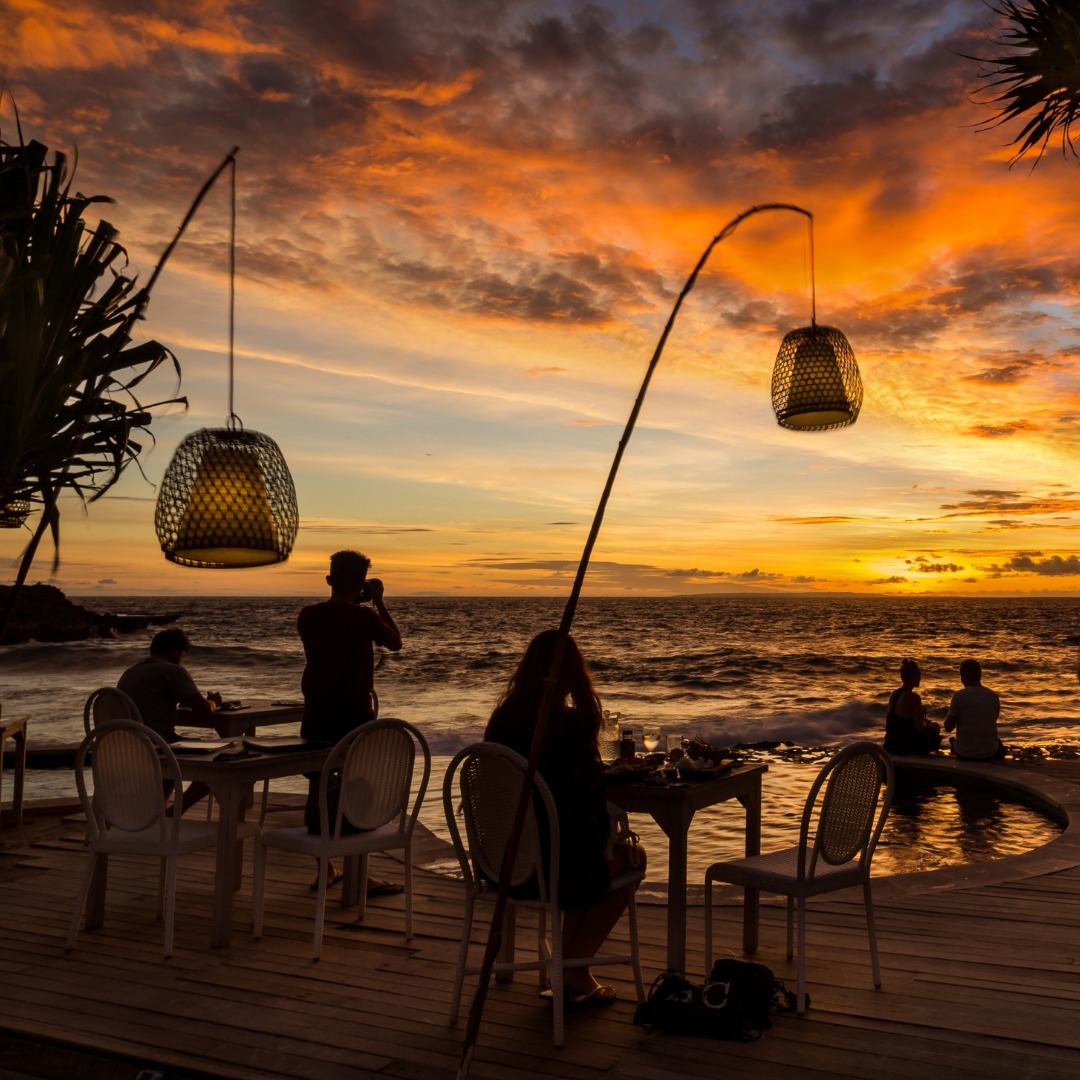
Lembongan’s best sunset spots include Sandy Bay Beach Club, which offers arguably the most unobstructed west-facing sunset view in the broader Bali area, at a fraction of Seminyak pricing. A cocktail at Sandy Bay at sunset costs around IDR 80,000 to 120,000. An equivalent at Potato Head runs IDR 150,000 to 250,000.

The Honest Take

Seminyak and Lembongan are not really rivals. They appeal to different versions of the same traveller. Seminyak suits those who want their luxury curated, convenient and credentialled. Lembongan suits those who want their luxury felt rather than photographed. Our honest recommendation to anyone choosing between the two: if you are travelling as a couple on a honeymoon or anniversary trip, Lembongan’s intimacy and ocean views make it the more romantic destination. If you are travelling with corporate clients or need a hotel with a business centre and a spa that seats 50 people, Seminyak is the right call.

For couples specifically, our private villas for couples and romantic restaurant guide show what the island does better than anywhere on the mainland.

Nusa Lembongan vs Ubud

This is the most interesting comparison in the article, because Ubud and Lembongan are the least similar options and the most commonly miscompared.

The Core Difference

Ubud is inland Bali’s cultural and wellness capital. It sits in the hills of central Bali, surrounded by rice terraces, temples and river gorges. It has no beach. Lembongan is an island. It has no temple circuit, no rice terraces, and no royal palace. Comparing them is a little like comparing a mountain retreat to a beach resort: both are excellent, but they solve different problems.

Most travellers who ask “should I choose Ubud or Lembongan?” are really asking which kind of experience they want from their Bali trip. Our genuine recommendation is that a trip longer than seven days should include both.

Nature and Scenery

Ubud’s surrounding landscape is extraordinary by any measure. The UNESCO World Heritage-listed rice terraces of Tegallalang and Jatiluwih, more than 300 temples within an hour’s drive, the Sacred Monkey Forest Sanctuary (home to approximately 700 Balinese long-tailed macaques), and over 80 waterfalls within reach make it one of the most scenically rich inland destinations in Southeast Asia.

Lembongan’s landscape is horizontal rather than vertical. The island’s 212-hectare mangrove forest on the northeastern coast, the limestone sea cliffs of the southern shore, the crystal Badung Strait, and the underwater world beneath it (25+ named dive sites, manta ray encounters at Manta Point, 20 to 25 metre visibility on clear days) make for a completely different but equally extraordinary natural environment.

If your instinct is to look up at terraced hillsides, go to Ubud. If it is to look into turquoise water, come to Lembongan. Both instincts are entirely reasonable.

Activities

Ubud’s activity offering is built around culture, craft and the land. Traditional Kecak dance performances at Ubud Palace most evenings, more than 20 yoga studios, cooking classes, silversmithing and batik workshops, cycling through rice fields at dawn, and temple tours guided by local priests are all part of the Ubud experience. The Yoga Barn alone hosts approximately 30 classes per day across multiple disciplines and accommodates guests on multiday retreat programs.

Lembongan’s activities are built around the ocean. Surfing at Playgrounds, Shipwrecks and Lacerations (three separate breaks within 10 minutes of the main beach), diving with manta rays and mola mola, snorkelling in protected bays, paddleboarding through the mangrove forest, cliff jumping at Nusa Ceningan’s Blue Lagoon, and diving at sites that rival anything in Indonesia are all on offer within a short scooter ride or boat trip of your accommodation.

We take: if you do not swim, snorkel, surf or dive, Ubud will probably give you a richer activity experience. If the ocean is why you came to this part of the world, Lembongan delivers at a level that Ubud simply cannot.

Cost

Ubud’s accommodation costs sit slightly below Seminyak but comparable to Lembongan. A mid-range guesthouse or small villa in Ubud runs IDR 400,000 to 1,200,000 per night. Food at local warungs around Ubud’s traditional market area can be as low as IDR 25,000 to 50,000 per meal. The overall mid-range daily spend in Ubud runs AUD 80 to 160 per person.

Lembongan’s on-island daily spend is similar (AUD 70 to 150 per person mid-range), with the boat transfer as the primary additional cost. For stays of three nights or more, the total trip cost is broadly comparable.

Wellness

This is one category where Ubud wins decisively, and we will not argue otherwise. COMO Shambhala Estate, Fivelements Retreat, The Yoga Barn, Radiantly Alive, Taksu and dozens of smaller retreat centres make Ubud one of Asia’s premier wellness tourism destinations. If a yoga retreat or spiritual wellness program is the primary purpose of your trip, Ubud is where you need to be.

Lembongan has a growing and genuinely lovely wellness scene: morning yoga with ocean views, with 5-10 participants only, massage and healing practitioners, and a pace of life that has its own restorative effect. Our guide to yoga and wellness on Nusa Lembongan covers what is available. But the honest answer is that Lembongan’s wellness offering supplements a beach trip rather than anchoring one.

Crowds

Ubud’s Monkey Forest now receives over 10,000 visitors on peak days. Jl. Monkey Forest and Jl. Hanoman, the two main roads, are congested for most of the daylight hours in July and August. The rice terrace viewpoints at Tegallalang are crowded enough that some visitors describe them as disappointing compared to expectations.

Lembongan sees nowhere near these numbers. The island’s physical size is the most effective crowd-management system imaginable. Our guide to conscious travel on the island addresses how the local community manages visitor growth thoughtfully.

The “Old Bali” Argument: Why Lembongan Wins on Vibe

Multiple travellers have described Nusa Lembongan as feeling like “Bali twenty years ago,” and we hear this observation regularly enough to take it seriously. Here is what it actually means in specific terms.

In 2010, Canggu had fewer than 20 cafes and most visitors had never heard of it. Today it has over 300 cafes and consistently ranks as Bali’s most-visited area. In the same period, Seminyak’s average nightly rate increased 25 to 35% and Ubud’s main road went from walkable to congested. These changes have made all three areas richer in options and simultaneously more stressful to be in.

Lembongan’s changes in the same period have been more modest. The restaurant scene is better, the accommodation quality is higher, and we have watched genuinely excellent properties open in Sandy Bay and Tamarind Bay that were not here five years ago. But the island has not had a Canggu moment. There are still limited cars. The main Jungutbatu strip is still short enough to walk end to end in 20 minutes. The local seaweed farmers still use the same beach as the tourists. The roosters still wake you before the alarm does.

Whether that is “better” is entirely personal. But if the thing you are looking for is the version of Bali that made people fall in love with this corner of the world in the first place, Lembongan is where you are more likely to find it.

Where Bali Mainland Genuinely Wins

Our authority as a guide to Nusa Lembongan is built on honesty. So here is the honest list of things where mainland Bali is simply better, no caveats:

Shopping. There is no real retail on Lembongan beyond souvenirs and a handful of small boutiques. If shopping is an important part of your holiday, the island will leave you wanting more. Seminyak and Canggu handle this need comprehensively.

Restaurant variety. Forty to sixty restaurants versus Canggu’s 300-plus. Lembongan has excellent food but limited breadth. Long-term visitors will cycle through the options within a week.

Nightlife. FINNS Beach Club and Canggu’s bar strip have no equivalent on the island. A night out on Lembongan ends around 10pm. If that sounds like a selling point, welcome to the island. If it sounds like a deal-breaker, stay in Canggu.

Cultural immersion. Ubud’s temple circuit, traditional dance performances, royal palace, craft workshops, and living Balinese arts culture are irreplaceable. Lembongan has Balinese culture and a deeply warm local community, but nothing at Ubud’s scale.

Digital nomad infrastructure. No co-working spaces, no fibre internet, no nomad community of scale. Canggu is the clear winner for remote workers.

Accessibility. Seminyak is 20 minutes from DPS airport during off-peak hours. Lembongan requires a drive to Sanur plus a 30 to 45 minute boat crossing. Our guide to making the crossing makes it as simple as possible, but the logistical step exists.

suku beach club, where to eat in nusa ceningan, restaurants in nusa ceningan, beach club in nusa ceningan, explore nusa ceningan

Where Lembongan Genuinely Wins

And now the honest case for the island, equally without caveats:

Ocean quality. The clearest, most swimmable water in the broader Bali area. Water visibility of 10 to 25 metres, no river runoff, protected reef bays for safe swimming. Lembongan’s best beaches are genuinely among the finest in Indonesia.

Diving and snorkelling. More than 25 named dive sites within 20 minutes by boat. Manta ray encounters at Manta Point are among the most reliably accessible in Indonesia. A half-day snorkel tour costs IDR 250,000 to 400,000 per person, compared to IDR 450,000 to 700,000 for equivalent tours departing from Kuta or Seminyak. Our diving guide and snorkelling guide cover the best sites in detail.

Surfing access. Three surf breaks (Playgrounds, Shipwrecks, Lacerations) accessed by boat from Jungutbatu within minutes, without the mainland traffic, crowd overhead and commercial saturation. Our surfing guide rates each break honestly by skill level.

Families. Calm, reef-protected bays where children can safely swim. Car-free roads that eliminate the most anxiety-inducing element of Bali for parents. Short distances between key sights. Our family guide and guide to child-friendly restaurants lay out why this island consistently outperforms the mainland for families with young children.

Crowds. A permanent population of 5,000, no cars, no motorbike taxis touting from every corner, no hawker pressure. The island physically cannot replicate mainland crowd levels.

Peace. At 8 km² and car-free, the island enforces a slower pace that no amount of money or intention can buy on the mainland during peak season.

Is Lembongan Better Than Bali? The Decision Guide by Traveller Type

This is the table of our wishes for every article, because the right answer to “is Lembongan better than Bali?” depends entirely on who is asking.

Traveller typeBest baseWhy
Digital nomad needing connectivityCangguCo-working, fibre, nomad community, nothing comparable on island
Party travellerCangguFINNS, Old Man's, bars until late
Luxury spa seekerSeminyak or UbudInternational chains, COMO Shambhala, Potato Head
Honeymoon coupleLembonganPrivate villas, quiet beaches, crystal water, no crowds
Family with young kidsLembonganCalm bays, car-free roads, safe distances
Surfer (beginner to intermediate)LembonganFive breaks, uncrowded water, short transfer
Culture and temple travellerUbud300+ temples, dance, arts, irreplaceable
Diver or snorkellerLembongan25+ dive sites, manta rays, 10 to 25 metre visibility
Budget traveller with under 5 daysCanggu or UbudLower fixed transport cost, more per-dollar variety
Budget traveller with 5+ daysLembonganOnce boat cost is spread across days, strong value
First Bali trip with 10+ daysDo both3 to 4 days Canggu or Ubud, then cross to Lembongan

The Real Answer: Should You Do Both?

Our genuinely held view, based on a decade of helping visitors plan these trips, is that the “Lembongan vs Bali” question is often a false choice. Most travellers framing it as either/or have a trip long enough to do both, and almost everyone who does both agrees that the combination is better than either alone.

The contrast works in both directions. After three or four days in Canggu’s buzz (great cafes, surf sessions, late nights), a morning boat to Lembongan feels like a revelation. After two or three nights on the island (clear water, early mornings, a slower clock), returning to Bali feels energising rather than overwhelming. The 30 to 45 minute crossing between Sanur and Lembongan is one of the most satisfying itinerary shifts available in Southeast Asia, and at IDR 150,000 to 375,000 one-way, it is not a significant barrier.

We suggested a split for a 10-day Bali trip: two nights in Ubud for temples and rice terraces, two nights in Canggu for food and energy, then four nights in Lembongan for beaches and ocean. The last few days on the island tend to be the ones visitors talk about longest.

For what a day trip looks like if you want to test the waters before committing to an overnight, our day trip guide covers it. For first-time overnight visitors, the first trip to Nusa Lembongan is the starting point.

Frequently Asked Questions

Is Lembongan better than Bali?

For the right traveller, yes. Nusa Lembongan is better than mainland Bali for ocean activities, family holidays, couples seeking quiet beaches, and anyone who finds the density and noise of Canggu or Seminyak exhausting. It is not better for shopping, nightlife, cultural immersion, or digital nomad infrastructure. Most visitors to the region benefit from doing both.

Is Nusa Lembongan worth visiting?

Absolutely, yes. We have been saying this for over a decade, and the island’s growing popularity confirms it. The ocean quality, the uncrowded beaches, the snorkelling and diving, and the pace of life make it one of the most rewarding island stops in Southeast Asia. The full Nusa Lembongan guide covers what to do once you arrive.

Is Nusa Lembongan better than Canggu?

It depends entirely on what you want. Canggu wins on food variety (300+ venues), nightlife, digital nomad infrastructure, and energy. Lembongan wins on beaches (genuinely swimmable), ocean activities, family suitability, crowds (or lack of them), and overall peace. Neither is objectively better. They are different experiences.

Is Nusa Lembongan cheaper than Bali?

On-island daily costs are modestly lower than South Bali’s tourist areas, roughly 15 to 20% cheaper on food and scooter hire. Accommodation ranges similarly. The variable is the boat transfer (IDR 300,000 to 750,000 return per person), which makes shorter stays proportionally more expensive. For stays of four nights or more, Lembongan is generally a lower total-cost destination than Seminyak or Canggu at equivalent quality levels.

Can I visit Nusa Lembongan and Canggu on the same trip?

Yes, easily. Most visitors base themselves in Canggu, Seminyak or Ubud first, then catch a morning fast boat from Sanur to Lembongan for a few nights before returning. The crossing takes 30 to 45 minutes, and operators include hotel pickup from most South Bali areas. Our guide to the crossing explains the logistics step by step.

Is Nusa Lembongan good for families?

It is one of the best family island destinations in the region. Calm, reef-protected bays that young children can swim in safely, car-free roads, short distances between attractions, and excellent child-friendly restaurants make it a genuinely relaxed destination for parents. Our family guide covers the details.

How long should I spend in Nusa Lembongan versus Bali?

We recommend a minimum of two nights on Lembongan to make the crossing worthwhile and give enough time to explore properly. For a 10-day Bali trip, a split of roughly six days on the mainland and four on the island works well. The island rewards a slower pace and most visitors wish they had stayed longer.

What is the nightlife like in Nusa Lembongan compared to Bali?

Minimal compared to Canggu or Seminyak. Sandy Bay Beach Club, Ohana’s, Arna Ocean Lounge, Suku Beach Club and a handful of beachside bars provide a lovely sunset drinks scene and the occasional live music night. The island largely winds down by 10 pm. This is either a selling point or a dealbreaker, and we are honest enough to say which camp you are in before you book.

plant based cafe in nusa lembongan

Healthy Cafés and Plant-Based Eats in Nusa Lembongan

There is something about island life that makes you want to eat well. Maybe it is the slow mornings, the salt in the air, or the fact that you have just spent the day swimming, cycling and chasing sunsets. Whatever it is, Nusa Lembongan delivers. This tiny island has quietly become one of the easiest places in Bali to eat healthy, with cafes serving up vibrant smoothie bowls, proper specialty coffee and plant-based plates that taste as good as they look.

The best part is that you do not have to be vegan to love it here. Review sites now list more than 25 vegetarian-friendly cafes and restaurants across Nusa Lembongan, and nearly every one marks its vegan and vegetarian dishes clearly, so the same menu that does a beautiful tofu scramble will also do you a perfect flat white and a slice of carrot cake. So whether you are fully plant-based, gently flexitarian, or just looking for a fresh, wholesome meal between adventures, here is our guide to the healthy cafes and plant-based eats in Nusa Lembongan.

Healthy Food in Nusa Lembongan

Why Nusa Lembongan Is a Plant-Based Paradise

Lembongan has always had a gentle, conscious soul. That same spirit is reflected in the island’s mindful, eco-conscious approach to travel, and it even extends to the food on your plate. 

What makes the island so friendly for healthy eating is the variety. Plant-based here does not mean a single sad salad. You will find colourful Buddha bowls, raw treats, fresh juices, traditional Indonesian gado gado and tempeh dishes, plus pizzas, pastas and burgers with vegan versions ready to go. If you want to go deeper on the fully vegan side of things, we also have a dedicated guide to the best vegan food on Nusa Lembongan that pairs perfectly with this one. For now, let us walk you through the cafes worth building your days around.

The Best Healthy Cafés and Plant-Based Spots in Nusa Lembongan

Most of these sit in and around Jungutbatu and Mushroom Bay, so they are easy to weave into a day of exploring. We have noted the vibe, the dishes to order and who each spot is best for.

Bali ECO Deli


If you only have time for one healthy cafe on the island, make it this one. Tucked just off the main road in Jungutbatu, Bali ECO Deli offers a leafy little oasis. With 4.7 stars from more than 2,300 Google reviews, it has clearly built a loyal following. The menu is built around fresh, balanced, made-from-scratch food, with a huge range of vegan and vegetarian options, and Bali ECO Deli is proud to be the island’s first healthy restaurant.

Come for breakfast and order a smoothie bowl; the Island Berry Bliss or the Green Glow are both lovely, or go for the loaded avocado toast and scrambled tofu on sourdough. Later in the day, the lentil dal, watermelon salad and Thai green curry are the crowd favourites. The coffee is properly good too, with alternative milks across the board. Best for a healthy start to the day, a long lazy brunch or a sweet treat like brownies, carrot cake and cookies.

bali eco deli, restaurant in jungutbatu nusa lembongan

Ombak Zero Waste Café

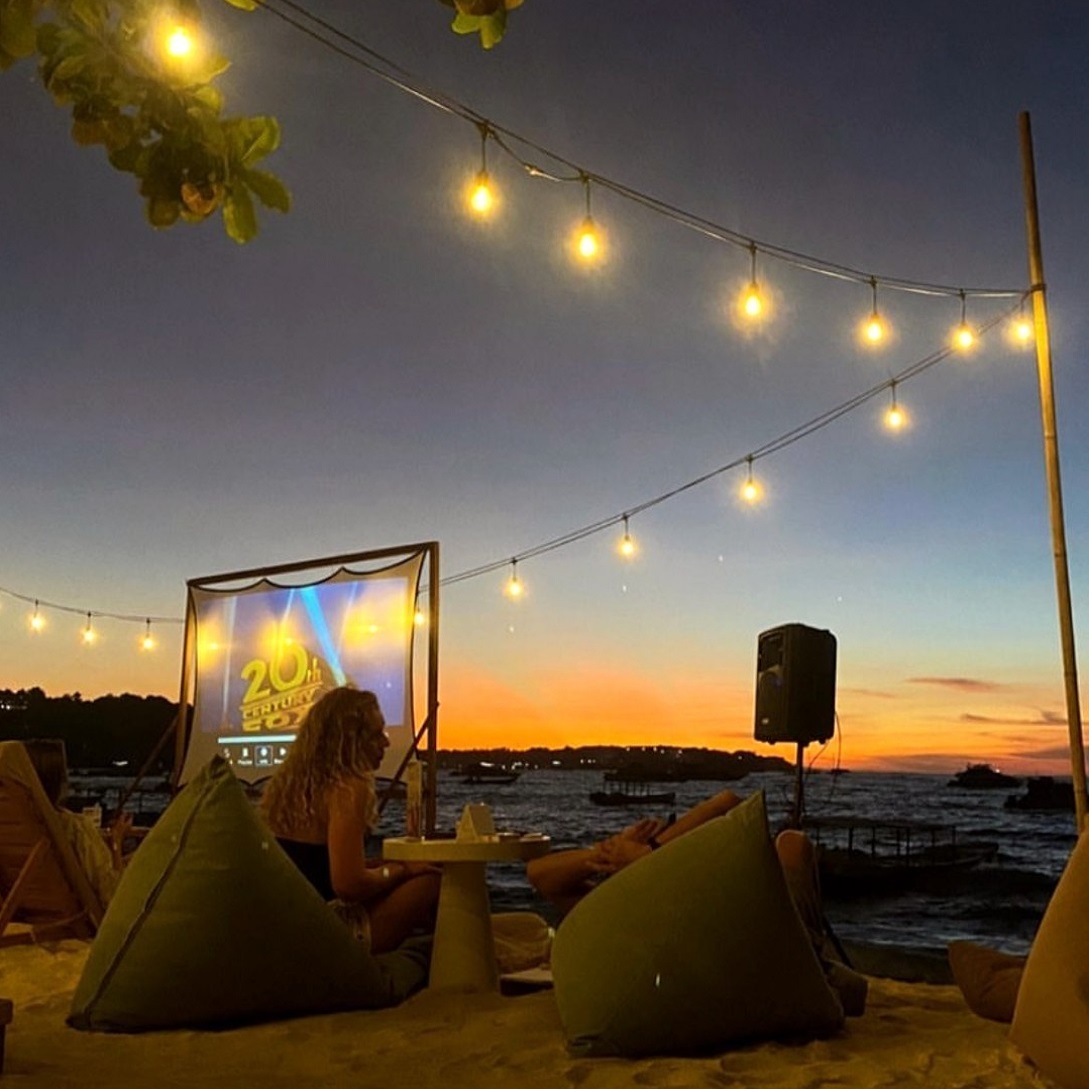
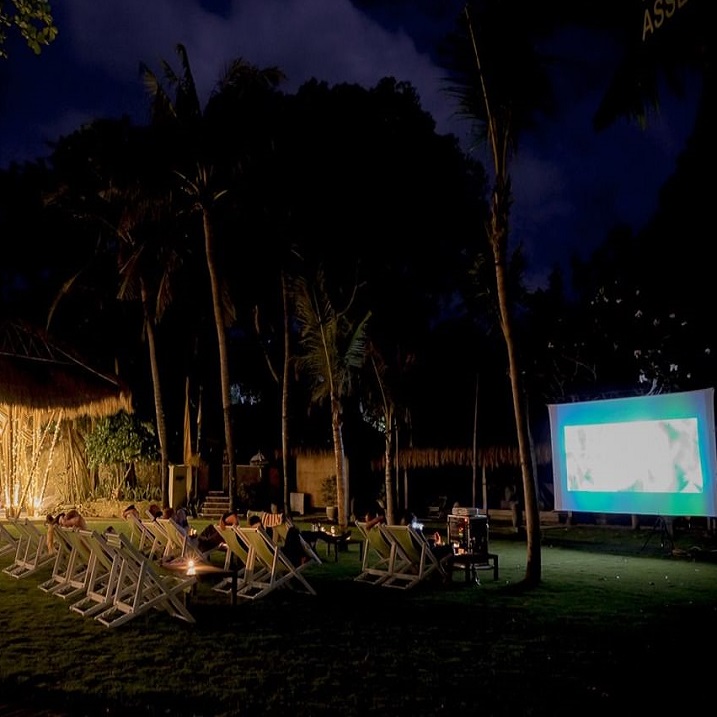
Right on the Jungutbatu beachfront, Ombak takes the island ethos and turns it all the way up. The cafe embraces a low-waste approach, with a wide selection of vegan-friendly dishes and one of the island’s nicest ocean views. Grab a table overlooking Shipwreck surf break, watch the surfers take on the waves, order something fresh, and feel good knowing the kitchen is committed to reducing its environmental footprint. Every Monday evening, Ombak also hosts an Ocean-themed Movie Night, adding another reason to visit. Best for conscious travellers and a slow beachfront breakfast.

ombak zero waste cafe, plant based cafe in nusa lembongan

Ginger & Jamu

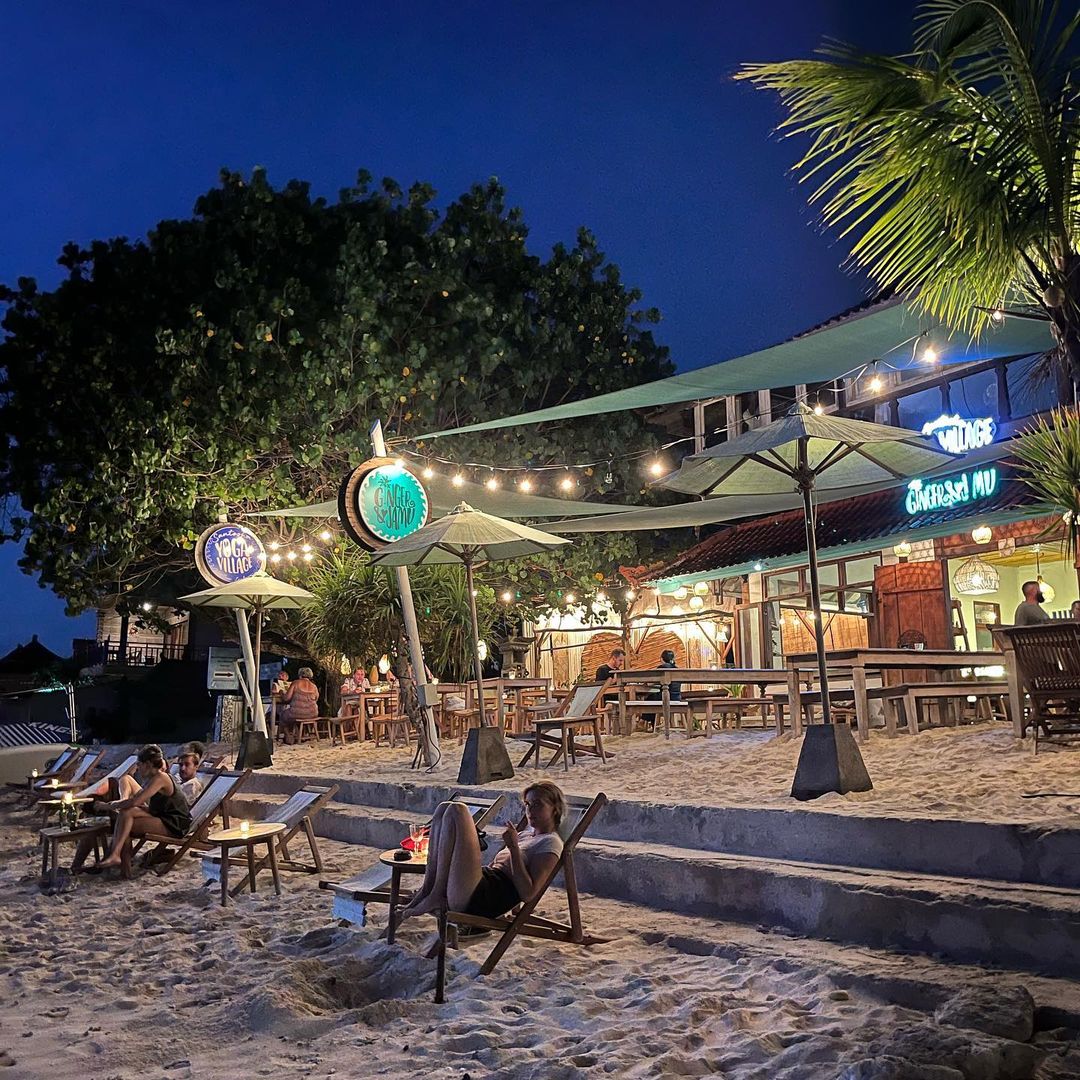
Sitting directly on Jungutbatu Beach, Ginger & Jamu has that easy, chilled-out vibe that makes you lose track of time. Vegan options are clearly marked, and their signature jamu is a must-try, offering a refreshing taste of Indonesia’s traditional herbal drink. The view of the surfers paddling out is exactly what visitors come to the island for. Stay through to golden hour, or head upstairs to Santhosa Yoga Village, where the yoga shala overlooks the sunset and offers one of the most peaceful spots to end the day. Best for a relaxed lunch followed by sunset views and an evening yoga session.

ginger & jamu, plant based cafe in nusa lembongan

Tigerlilly’s

On the main road in Jungutbatu, Tigerlilly’s brings a slightly more boho, design-led energy and a menu that plant-based eaters will have fun with. Tofu gyoza, tempeh barbecue ribs, Vietnamese chicken salad, tacos and bao buns all make appearances, alongside the popular build your own meal option, allowing diners to customize their plate to suit their tastes. Prices sit a touch above the simple warungs, but you are paying for the vibe and the plating. Best for dinner with friends or a treat-yourself kind of meal.

tigerlilly's cafe, plant based cafe in nusa lembongan

Hai Ri Zen at Hai Tide Beach Resort

For an elevated beachfront dining experience, Hai Ri Zen at Hai Tide Beach Resort is well worth a visit. Overlooking the calm waters of Mushroom Bay, this semi-fine dining restaurant blends East-meets-West flavours with a menu featuring fresh seafood, vegetarian dishes and beautifully presented seasonal specials. The beachfront setting makes it an ideal choice for a leisurely lunch or sunset dinner, while complimentary pick-up and drop-off services add an extra level of convenience for diners. Best for relaxed seaside dining with refined flavours and stunning ocean views.

hai ri zen, plant based cafe in nusa lembongan

The Playful Table by Morin

Perched above the coastline with sweeping ocean views, The Playful Table by Morin is the island’s only fully plant-based restaurant. The menu combines fresh salads, cassava wraps and Asian-inspired dishes, alongside nourishing smoothies and a comforting turmeric chai latte. Visit on Taco Tuesday for creative plant-based tacos, or on Fisherman’s Friday for a seasonal plant-based interpretation inspired by the catch of the day. Best for a wholesome meal with panoramic ocean views.

the playful table, morin resort, plant based cafe in nusa lembongan

A Local Warung for Budget Plant-Based Eats

For all the polished cafes, do not skip the humble warungs. Lembongan is dotted with family-run spots where a big plate of mie goreng or nasi campur loaded with tempeh, tofu and vegetables costs a fraction of the cafe prices. The owners are some of the warmest people you will meet, and many know exactly what vegan means and will happily help you order. This is where the island feeds itself, and it is every bit as worthy of your appetite. Best for authentic, affordable plant-based meals and a genuine local welcome.

Vegetarian-Friendly Cafés with a View on Nusa Ceningan

When you are ready to explore a little further, hop across the iconic Yellow Bridge to Nusa Ceningan. It is an easy add-on to your day, and there are a couple of healthy spots over here that are well worth the ride. While you are at it, you can fold in a few of the best things to do on Nusa Ceningan like the Blue Lagoon and the cliff jump.

Klyf Club Blue Lagoon perches on the cliff overlooking impossibly blue water, and you might even spot turtles swimming in the lagoon below while sipping a fresh juice. Vegan options are clearly marked, and the drinks menu is generous. A little closer to the Yellow Bridge, The Sand Ceningan sits right over the sea with views across the seaweed farms, making it the perfect stop for a coconut and a plant-based bite before heading back to Lembongan.

Suku Beach Club also offers a relaxed beachfront setting with healthy dishes, fresh juices, and vegetarian-friendly options. While Sea Breeze is another great spot to enjoy wholesome meals, tropical drinks, and stunning sea views in a laid-back atmosphere.

Find Your Spot by Diet and Craving

Short on time and just want a quick steer? Here is the cheat sheet.

Looking forWhere to go
Smoothie bowlsBali ECO Deli
Salad bowlsGinger & Jamu, The Playful Table
Gluten-free optionsBali ECO Deli
Beachfront breakfastOmbak, Ginger & Jamu
Budget plant-basedLocal warungs in Jungutbatu
Vegan dinner with friendsTigerlilys, The Playful Table
A view to rememberKlyf Club, Sea Breeze Ceningan & Suku Beach Club

If you want even more ideas across every cuisine, our roundup of Lembongan’s best restaurants and our guide to island-style brunch will keep you very well fed.

Tips for Eating Healthy and Plant-Based in Nusa Lembongan

A few small things make eating well on the island even easier.

Bring cash. Many of the smaller cafes and warungs are cash only, and an ATM run can eat into your beach time, so carry enough rupiah for the day.

Most cafes open early, with popular spots like Bali ECO Deli serving from 7 am right through to 9 pm, so breakfast people and brunch people are equally spoiled. Kitchens can wind down earlier than you expect though, so do not leave dinner too late.

In the warungs, a friendly “tanpa daging” or simply asking for the vegetarian version goes a long way, and most owners are happy to adapt a dish for you. Tempeh and tofu are everywhere and always a safe, delicious bet.

Refill rather than buy. Plenty of cafes here will top up your reusable bottle, which keeps single-use plastic off the island. It is a small habit that fits right in with the conscious way of travelling that makes Lembongan special.

If wellness is your reason for the trip, pair your healthy eating with a class or two from our yoga and wellness guide to Nusa Lembongan. And if you are still planning the basics, our guide to getting to Nusa Lembongan covers the boats from Sanur.

Frequently Asked Questions

Is Nusa Lembongan good for vegans and vegetarians?

Yes, it is one of the easiest islands in Bali for plant-based eating. Review sites list more than 25 vegetarian-friendly cafes and restaurants across Nusa Lembongan and neighbouring Ceningan; most cafes clearly mark their vegan and vegetarian dishes, and even the local warungs are happy to prepare meat-free versions of classics like nasi goreng and gado gado.

Where is the best healthy breakfast in Nusa Lembongan?

Bali ECO Deli is the standout for a healthy breakfast, with smoothie bowls, avocado toast and scrambled tofu. For a beachfront option, the Beach Cafe at Lago, Ginger and Jamu,  and Ombak Zero Waste Cafe are both excellent.

Are there gluten-free options in Nusa Lembongan?

There are. Bali ECO Deli in particular offers gluten-free choices, and many cafes can adapt salads, bowls and rice-based dishes on request. It always helps to mention your needs when you order.

How much does a healthy meal cost in Nusa Lembongan?

A meal at a cafe typically runs from around 60,000 to 150,000 rupiah, while a plate at a local warung can be as little as 25,000 to 35,000 rupiah. Specialty coffee usually sits between 30,000 and 65,000 rupiah.

Do cafés in Nusa Lembongan take cards or cash?

Some of the larger cafes accept cards, some are strictly cashless, but many smaller spots and warungs are cash only, so it is best to carry rupiah with you.

Eat Well, Island Style

Eating healthy on Nusa Lembongan never feels like a compromise. It feels like part of the holiday. Start your mornings with a smoothie bowl by the sea, fuel up on plant-based plates between swims and dives, and let the island’s slow, conscious rhythm do the rest. Pick one cafe from this list to begin with, and we have a feeling you will be working your way through the rest before your trip is over. Here at The Lembongan Traveller, we eat our way around the island so you can arrive knowing exactly where to go.

Ready to plan the whole thing? Our complete Nusa Lembongan guide has everything else you need, from beaches to boats to where to stay.

how to get to nusa lembongan

How to Get to Nusa Lembongan from Bali: Fast Boats, Prices & Complete Cost Guide (2026)

Your complete guide to getting from Bali to Nusa Lembongan, including every cost you will encounter along the way.

There is one boat, one strait, and about 40 minutes of open water between you and one of the most underrated islands in Indonesia. Getting to Nusa Lembongan from Bali is genuinely one of the easier island crossings you will make in Southeast Asia. But how much the whole trip costs, where you leave from, and which fast boat operator actually gets you there comfortably depend on where you are staying in Bali: these are questions worth answering properly.

We have helped thousands of visitors plan this exact journey over the past decade, and this guide covers every step: the crossing itself, how to get from your Bali accommodation to the right port, a complete cost to Nusa Lembongan from Bali breakdown, and what to expect the moment you step off the boat and onto the island.

The Quick Answer

For those who just need the essentials right now:

Crossing distance 15 km across the Badung Strait
Main departure port Sanur Harbour, Bali
Crossing time 30 to 45 minutes
One-way fast boat fare IDR 175,000 to 450,000 (approx. AUD 14 to 36)
First departure from Sanur Around 7 am
Last departure from Sanur 5 pm
Total time door to door from DPS Airport 1.5 to 2 hours
Can you drive there? No: boat only, no bridge or road crossing from mainland Bali

Keep reading for the full cost breakdown by trip length, the drive-time guide from different parts of Bali, and a proper operator comparison.

There Is Only One Way to Get There, and That Is a Good Thing

Before anything else: you cannot drive to Nusa Lembongan. There is no bridge, no causeway, and no car ferry from mainland Bali. The island sits 15 km across the Badung Strait, and the only way to reach it is by fast boat. For more than 95% of visitors, that means boarding at Sanur Harbour on the east coast of Bali, which handles the overwhelming majority of the estimated 500,000 or more annual crossings between mainland Bali and the Nusa Islands.

This might sound complicated if you have never done it before, but in practice it is one of the most straightforward parts of the trip. Most fast boat operators handle the entire process: they pick you up from your hotel in Bali, drive you to Sanur, load your bags, sail you across, and arrange transport to your accommodation on the other side. You simply show up where they say and follow the signs. Our team arranges this exact package for guests booking accommodation through us, matching your arrival time and location to the right boat and departure. More on that later.

Step One: Getting from Your Bali Accommodation to the Boat

Here is where most guides let you down. Every article will tell you to get to Sanur. Almost none of them tell you how long it takes or how much it costs depending on where you are actually staying in Bali.

The cost to Nusa Lembongan from Bali does not begin at the boat terminal. It begins at your hotel door. Here is what you need to know by area:

Bali Area Distance to Sanur Drive Time
(off-peak)
Drive Time
(peak traffic)
Estimated Transfer Cost
Kuta / Legian 11 km 25 min 50 min IDR 80,000–120,000
Seminyak 14 km 30 min 60 min IDR 100,000–150,000
Canggu 22 km 45 min 90 min IDR 150,000–200,000
Ubud 38 km 60 min 90 min IDR 200,000–300,000
Uluwatu / Bukit Peninsula 28 km 50 min 80 min IDR 180,000–250,000
Nusa Dua 16 km 30 min 55 min IDR 100,000–150,000
DPS Airport (Ngurah Rai) 13 km 35 min 60 min IDR 180,000–250,000

Peak traffic on Bali’s roads typically hits between 7 am and 9 am and again between 4 pm and 6 pm. If your fast boat departs at 8 am and you are staying in Canggu, that means leaving your hotel by 6 am at the very latest. It sounds early, but morning crossings are genuinely worth it: the sea is calmer, the skies are clearer, and the whole island feels easier to reach before Bali’s roads wake up.

Your Options for Getting to Sanur

We recommend a private transfer, and it is what most of our guests use. You book it as part of your fast boat package, a driver collects you from your hotel at the agreed time, loads your luggage, and drops you at the terminal with time to spare. No negotiating, no surprises.

Grab or Gojek works well from South Bali (Kuta, Seminyak, Nusa Dua) and is often the cheapest option if you are travelling light, with fares to Sanur typically running IDR 60,000 to 100,000. It is less reliable from Ubud (38 km from Sanur) or the Bukit Peninsula, where driver availability before 7 am can be thin and surge pricing at peak hours can push fares 30 to 50% above the base rate.

Online transportation

Airport taxi counters are straightforward if you are heading to Lembongan on the same day as your arrival. Fixed-price taxis from the terminal to Sanur cost around IDR 180,000 to 250,000 depending on which zone your hotel is in.

All-in-one fast boat packages are the simplest choice for most people. Your hotel pickup from anywhere in the agreed service zone is bundled into your ticket price, which we arrange as part of a combined transfer and accommodation booking. You can read more about the full journey experience in our guide to getting to Nusa Lembongan.

One important note on timing: fast boat operators ask passengers to arrive at Sanur at least 30 to 60 minutes before departure. Missing your boat means waiting for the next sailing or forfeiting your fare. Build the buffer in.

Step Two: Choosing Your Fast Boat

This is where most guides give you a list of operators and leave you to figure out the rest. We want to give you something more useful: a proper comparison of what each operator offers, where they land, and what is genuinely included in the ticket price.

Fast Boat Operator Comparison

OperatorOne-Way FareKey Departures
(Sanur)
Landing Point
(Lembongan)
Bali Hotel
Pickup
Island
Pickup
Rocky Fast Cruise Rp 430,000 (shared) – Rp 560,000 (private) 10 am, 12 pm,
2 pm, 5 pm
Rocky Beach Club,
Telatak Harbour
(jetty-to-jetty)
YesYes
D’Stars Fast Ferry Rp 430,000 (shared) – Rp 560,000 (private) 9:15 am, 1 pm,
5 pm
Jungutbatu BeachYesYes
Setia Fast Ferry Return only:
~Rp 745,000–930,000
(one-way on enquiry)
9:30 am, 1:30 pm,
5 pm
Jungutbatu BeachYesYes
D'Camel Fast Ferry IDR 175,000–275,000 8 am, 11 am,
3 pm
Jungutbatu BeachYesYes
Bali Hai Cruise Rp 700,000 (adult)
Rp 500,000 (child 4–14)
9 am only
(1 sailing/day)
Mushroom Bay
(Hai Tide Beach Resort)
Limited zones Limited

Prices and schedules are indicative for 2026 and may vary by season. Always verify directly with your operator before booking.

What “Hotel Pickup” Actually Means

Not all pickups cover the same geography. D’Stars and Rocky cover the widest service areas, including Ubud and parts of the Bukit Peninsula, but often at an additional cost above the base fare. Arthamas and smaller operators typically limit free pickup to South Bali (Kuta, Seminyak, Sanur itself). If you are staying further afield, check the fine print, or we can advise on the most efficient combination for your location.

What “Hotel Pickup” Actually Means

Not all pickups cover the same geography. D’Stars and Rocky cover the widest service areas, including Ubud and parts of the Bukit Peninsula, but often at an additional cost above the base fare. Arthamas and smaller operators typically limit free pickup to South Bali (Kuta, Seminyak, Sanur itself). If you are staying further afield, check the fine print, or we can advise on the most efficient combination for your location.

Wet vs Dry: The Boarding Experience Nobody Warns You About

Here is something almost every guide forgets to mention. At most operators’ Sanur boarding points, passengers walk through ankle-to-knee-deep water to board the boat. The same applies on arrival at Jungutbatu: you step off the boat into the shallows and wade to shore. For most people this is part of the fun. If you are wearing a maxi dress, carrying delicate camera gear, or travelling with children and the elderly, it is worth knowing in advance.

Rocky Fast Cruise is the notable exception. Their service uses Telatak Harbour on Nusa Lembongan, which offers a proper jetty-to-jetty experience: you board from a pier in Sanur and step off onto a pier on the island. Shoes stay dry, boarding is more orderly, and luggage handling is easier. For families or anyone who would rather skip the wade, it is worth factoring this into your operator choice.

Return Tickets vs Two One-Way Fares

Nearly every operator prices return tickets at a saving of 10 to 20% compared to buying two singles. Beyond the saving, a return ticket locks in your operator for both crossings, which simplifies the logistics. Unless you have a specific reason to use different operators each way, a return ticket is the cleaner choice.

For the full step-by-step on what happens from the moment you arrive at Sanur Port through to boarding and landing, we have covered it in detail in how to get to Nusa Lembongan from Sanur.

The Full Nusa Lembongan Cost Breakdown

This is the section that most travel guides skip entirely and the one that we hear the most questions about. Searching “cost to Nusa Lembongan from Bali” should give you real numbers to plan with, not vague ranges that leave you none the wiser. Here they are.

How Much Does a Day Trip to Nusa Lembongan Cost?

ItemMid-Range DIYGuided Tour
Transfer to Sanur (from South Bali) IDR 100,000–150,000
(AUD 8–12)
Included
Return fast boat fare IDR 400,000–750,000
(AUD 32–60)
Included
Scooter hire (one day) IDR 100,000–150,000
(AUD 8–12)
(Scooter hire- self drive)
Lunch IDR 100,000–200,000
(AUD 8–16)
Often included
2 to 3 activities (snorkelling, mangrove, entry fees) IDR 200,000–400,000
(AUD 16–32)
Included
Total per person (approx.) IDR 880,000–1,600,000 AUD 70–128

Our take: day trips work well if you are genuinely short on time, but the return boat fare alone typically accounts for 40 to 50% of a budget day trip’s total spend. Staying even one extra night spreads that fixed cost across more days and makes the whole trip significantly better value.

How Much Does a 2-Night Stay Cost?

Two nights is the sweet spot that we recommend to almost every first-time visitor. It gives you enough time to explore properly, see both the south coast and the mangroves, and still feel relaxed rather than rushed.

ItemBudgetMid-RangeComfortable
Return fast boat IDR 300,000–500,000 IDR 400,000–750,000 IDR 600,000–750,000
Accommodation (2 nights) IDR 1,000,000–2,000,000/night IDR 2,000,000–7,000,000/night IDR 7,000,000–10,000,000/night
Food per day IDR 100,000–200,000 IDR 200,000–400,000 IDR 400,000–800,000
Scooter hire (2 days) IDR 200,000–300,000 IDR 200,000–300,000 IDR 200,000–300,000
Activities over 2 days IDR 300,000–600,000 IDR 500,000–1,000,000 IDR 1,000,000–3,000,000
Total per person (approx.) AUD 94–144 AUD 166–288 AUD 317–577

How Much Does a 4 to 5 Night Stay Cost?

The longer you stay, the better value the fixed boat cost becomes. Four to five nights also gives you time to cross to Nusa Ceningan, join a dive or snorkel trip to Nusa Penida, and do absolutely nothing for at least one of those days, which is arguably the point.

For a 4-night stay, take the 2-night mid-range estimate and roughly double the accommodation and food costs while keeping the boat and scooter figures similar. Budget travellers can expect to spend around AUD 120 to 180 for four nights. Mid-range travellers typically budget AUD 200 to 350. Those who book accommodation through us also receive a 20% discount on their fast boat transfer, which meaningfully reduces the fixed cost component of any trip.

Browse our villa collection and resort listings to find accommodation that fits your budget.

Villa Utopia, The Lembognan Traveller, Lembongan Villas, Nusa Lembongan Villas, Lembongan Resorts, Lembongan Hotels, Lembongan Accommodation

Is Nusa Lembongan Cheaper Than Bali?

This comes up constantly, and the honest answer is: not entirely. While some local experiences can be more affordable than in Bali, many goods and services are similarly priced or even more expensive because most supplies have to be transported from Bali to Nusa Lembongan.

Day-to-day food costs are comparable to mid-range Bali. A warung meal on the island runs IDR 30,000 to 70,000, similar to a local restaurant in Seminyak or Sanur. Scooter hire costs IDR 100,000 to 150,000 (AUD 8–12) per day, which is about the same as rates in other areas of Bali, including Seminyak and Canggu. Accommodation ranges from budget bungalows under AUD 28 per night to private villas above AUD 288 per night, with less saturation at the very top end compared to Ubud or Canggu.

The biggest difference is what you are not spending money on. Nusa Lembongan has no shopping malls, no major nightlife precinct, no hawker-filled tourist markets pulling at your wallet every 50 metres. Most visitors find that their daily spend on the island is noticeably lower than an equivalent day in South Bali, even if individual prices look similar on paper.

What Will Cost More Than You Expect

We heard these surprises from visitors often enough to be worth flagging directly:

Peak season surcharges. In July to August and mid-December to mid-January, some fast boat operators charge 20 to 30% above their standard rates. Book early and factor this in.

ATM fees. There are fewer than ten ATMs on the island; most of them are in the Jungutbatu area, and they charge withdrawal fees of IDR 25,000 to 50,000 per transaction on top of any foreign exchange fees from your home bank. They also run out of cash on busy weekends. Withdraw a generous amount in Sanur or at DPS Airport before boarding.

Beach club and resort drink prices. Sunset cocktails at Sandy Bay Beach Club or Ohana’s can be Seminyak-level in pricing. Budget accordingly if sundowners are on your agenda.

Read our notes on travel insurance before you go, particularly if you plan to rent a scooter or join water activities.

Day Trip vs 2 Nights vs 4 Nights: Which Makes Sense for You?

Day Trip2 Nights4+ Nights
Who it suitsTime-pressed, short Bali itineraryFirst-timers wanting a proper island experienceSurfers, divers, slow travellers, families
Main sights coveredYes, if you plan wellYes, comfortablyYes, plus Ceningan and Penida day trips
Cost to Nusa Lembongan from Bali (boat) as % of total spendHigh (30 to 40%)Moderate (15 to 25%)Low (under 15%)
The honest verdictGood, but you will wish you had stayed longerThe sweet spotThe real Lembongan experience

We genuinely recommend at minimum two nights for anyone who has made it this far in their planning. The cost to Nusa Lembongan from Bali is the same whether you stay one day or five, and spending just one night means that fixed boat cost is working twice as hard against your overall budget.

For what a single day looks like, our day trip guide walks you through a realistic itinerary. For first-timers planning their first overnight visit, first trip to Nusa Lembongan is the right starting point.

What to Expect When You Arrive

Arrival gets glossed over in most guides, but if it is your first time making this crossing, knowing what to expect makes it far less chaotic.

At Sanur, you’ll check in at your operator’s counter (usually near the harbour entrance), leave your main luggage with the crew, and board the boat via the jetty. Keep your day bag, phone, and other essentials within easy reach, while the crew stores your main luggage safely in the hold. When you arrive in Nusa Lembongan, you’ll either disembark at a jetty (Rocky Fast Cruise) or step into shallow water to reach the shore (most other operators).

The crossing takes 30 to 45 minutes. In the dry season (April to October) it is typically smooth and scenic, with the Badung Strait averaging less than half a metre of swell on most mornings. In the wet season (November to March), particularly in January and February, swells of 1 to 2 metres are not uncommon and crossings can be cancelled or delayed on the roughest days. Sit toward the back of the boat if you are prone to motion sickness, and take seasickness tablets an hour before boarding if the swell is looking rough. We always advise wet-season guests to book morning departures and to have a flexible plan for the return crossing.

On arrival at Lembongan, if you have booked through us or a full-service operator, someone will be waiting on the beach or pier to meet you and take you to your accommodation. If you have not arranged a pickup, taxi trucks (converted pickups with bench seats) wait at the harbour for IDR 50,000 to 100,000 per person to anywhere on the island. As we always say: the first five minutes after landing set the tone for the whole trip, and a familiar face holding a sign with your name on it is a very good start.

One more thing: Bali’s tourist levy of IDR 150,000 (approximately AUD 12) per person is payable on your first visit to Bali, not the island. If you are heading straight from DPS to Lembongan, make sure you have completed the e-VOA process and the levy payment online in advance so your arrival is smooth.

For everything you need to know before you get on that boat, our island travel tips page is one of the most thorough resources on the site.

Can You Go Straight from Bali Airport to Nusa Lembongan?

Yes, and we organize this route regularly for guests flying into Denpasar. Here is how it works in practice.

The key variable is your flight arrival time. Clearing immigration, collecting luggage, and clearing customs at DPS typically takes 45 to 60 minutes on a quiet morning and up to 90 to 120 minutes during peak arrivals between 8am and 11am, when multiple wide-body international flights land within a short window. We recommend building at least 90 minutes from wheels-down to departure from DPS as a safe planning figure during peak season. Add 35 to 60 minutes to drive to Sanur, and you need to arrive at Sanur at least 30 minutes before your boat departs.

For a smooth same-day transfer, we recommend flights landing before 10am to catch a midday or early afternoon boat. Guests booking accommodation with us can have us match their flight ETA to the most suitable departure, with one driver handling the airport pickup and Sanur handover.

D’Stars, Rocky, and Setia accommodate airport pickups as part of their return transfer packages. We completed the DPS airport-to-Nusa Lembongan guide, which has step-by-step details if you want to plan the airport leg carefully.

Best Time to Make the Crossing

Nusa Lembongan’s fast boat runs year-round, but the experience and the cost to Nusa Lembongan from Bali both shift across the seasons.

Dry season (April to October) is peak. The sea is at its calmest, underwater visibility for snorkelling and diving reaches 15 to 25 metres on a good day, and the island is at its most photogenic. It is also when prices are highest and boats fill up fastest. Book at least two to three weeks ahead for peak sailings and do not assume you can walk up in the morning.

Wet season (November to March) brings lower prices (sometimes 15 to 20% below peak), far fewer crowds, and a lusher, greener island. The crossing can be rougher in January and February, but most mornings are still perfectly manageable. We consider February to early April and September to October the best windows for value, combining good weather with reasonable fares and accommodation rates that can sit 20 to 30% below July and August peaks.

One date to know: Nyepi (the Balinese Day of Silence) and Nyepi Laut (Sea Silence Day) fall on a different date each year (usually March and September) and result in all boats being cancelled for 24 hours. If your travel dates coincide, plan a night either side or embrace the extraordinary quiet of being on the island with no crossings in either direction. Our Nyepi Day guide explains what it is like on the island during the silence.

For the full case for travelling in the quieter months, our article on why you should visit Nusa Lembongan during off-peak season lays it out clearly.

Nusa Lembongan vs Nusa Penida: Which Should You Choose?

If you are trying to decide between the two islands, or wondering whether you can do both, here is our honest take.

Nusa Lembongan (8 km²) is compact, calm, and easy to get around. The cost to Nusa Lembongan from Bali is lower than to Nusa Penida (shorter crossing, more operators, more competitive pricing), the roads are manageable, and it has a genuinely walkable area in Jungutbatu with cafes, dive shops, surf hire, and beach restaurants.

Nusa Penida (204 km²) is dramatically larger and considerably more rugged. Roughly 40% of Nusa Penida’s road network remains unsealed or heavily potholed, and Google Maps travel times on the island are frequently accurate despite looking implausibly long, because speeds averaging 20 to 30 km/h are normal on the interior roads. The cliff scenery (Kelingking, Broken Beach, Angel’s Billabong) is simply more spectacular than anything on Lembongan. It also tends to cost more per day for activities and tours, with most Penida day packages running IDR 500,000 to 900,000 per person. As we often tell guests: Lembongan is the better base, Penida is the better day trip.

Can you do both? Absolutely. Local boats run from the Yellow Bridge on Nusa Lembongan to Nusa Penida for around IDR 75,000 to 100,000 one-way, making it a very viable day trip from your Lembongan base. Our honest comparison guide to Nusa Lembongan vs Nusa Penida helps you decide what suits your trip.

Practical Tips Before You Book

A few things we always tell first-time visitors before they confirm their travel:

Book your boat in advance. July to August and mid-December to mid-January boats do sell out, sometimes a week or more ahead. Do not leave it until the night before.

Confirm exactly what your ticket includes. Hotel pickup zone, luggage limits, and which landing point on Lembongan all vary by operator. Knowing before you book prevents surprises on the day.

Carry IDR cash before leaving Bali. There are less than ten ATMs on Nusa Lembongan, all in Jungutbatu, and our team on the ground reports that at least one machine runs dry on most peak-season weekends between July and August. Sanur has a better spread of ATMs within 500 metres of the harbour. Withdraw generously before boarding, and assume the island ATMs will charge IDR 25,000 to 50,000 per withdrawal on top of your bank’s fees.

Go offline with Google Maps. Download the Nusa Lembongan map offline before leaving Bali. Signal is functional across most of the island but drops in some quieter areas.

Check your travel insurance for water activities and scooter riding. Many standard policies have exclusions. The travel insurance notes are worth reading before you finalise anything.

For the full pre-trip checklist, our mindful travel tips to Nusa Lembongan and island travel tips are both worth bookmarking.

Frequently Asked Questions

How do I get to Nusa Lembongan from Bali?

By fast boat from Sanur Harbour. The crossing takes 30 to 45 minutes and runs multiple times daily, with the first boats leaving around 8am and the last around 4 to 5 pm.

How much does the fast boat to Nusa Lembongan cost?

One-way fares run from IDR 150,000 to 375,000 (approximately AUD 12 to 30) depending on the operator, season, and whether hotel pickup is included. Return tickets are discounted compared to buying two one-way fares.

How long is the boat ride from Bali to Nusa Lembongan?

30 to 45 minutes from Sanur, depending on sea conditions and which landing point on the island your operator uses.

How much does a day trip to Nusa Lembongan cost?

A budget DIY day trip (transfer, boat, scooter, food, two or three activities) typically runs IDR 610,000 to 1,000,000 per person (AUD 55 to 90). A guided all-inclusive day tour runs AUD 115 to 217 per person from South Bali.

What is the total cost to Nusa Lembongan from Bali for a 2-night stay?

Budget travellers typically spend around AUD 94 to 144 per person for two nights, including the boat, accommodation, food, scooter, and activities. Mid-range budgets run around AUD 166 to 288 per person. Comfortable villa stays typically cost around AUD 317 to 577 per person.

Is Nusa Lembongan cheaper than Bali?

Not necessarily. While some local experiences can be more affordable, many goods and tourist services cost the same or even more than in Bali because most supplies are transported from Bali. Overall, your daily expenses depend on your travel style and where you choose to spend.

What is the best fast boat company to Nusa Lembongan?

Rocky Fast Cruise is consistently well-reviewed and offers the only dry jetty-to-jetty experience. D’Stars Fast Ferry offers the widest hotel pickup coverage. Bali Hai Cruise is a solid option for onboard entertainment and F&B. We work with verified operators and can match you to the right one based on your location in Bali and arrival point on the island.

Do I need to book the boat in advance?

During peak season (July to August and mid-December to mid-January) yes, and ideally at least one to two weeks ahead. In shoulder and off-peak season, a few days notice is usually fine, though booking ahead is always the safer option.

Do boats run on Nyepi?

No. All boat crossings are cancelled on Nyepi (the Balinese Day of Silence) and Nyepi Laut (Sea Silence Day). Check your travel dates against the Balinese Hindu calendar if travelling between March and September. The Nyepi Day guide explains what to expect if you are already on the island when silence falls.

Can I fly directly to Nusa Lembongan from Bali?

No scheduled flights operate to the island. The fast boat from Sanur is the only practical route, and with crossings as short as 30 minutes, a flight would barely make sense even if one existed.

For more of the most frequently asked island questions, the full Nusa Lembongan FAQ covers everything from ATMs to Wi-Fi to what to pack.

Ready to Start Planning?

The crossing to Nusa Lembongan is about 40 minutes. The planning for that crossing should not take nearly as long. We are here to make both as straightforward as possible.

Book your accommodation through us and you will receive a 20% discount on your fast boat transfer, plus support from a team that has made this crossing hundreds of times and knows every operator, every timing, and every shortcut. Whether you are planning a day trip, a first two-night stay, or a longer surf and dive trip, our full Nusa Lembongan guide is the best next step.

For accommodation, our guide to the best areas to stay on Nusa Lembongan matches each part of the island to a different type of traveller, and why book with us explains what you get that no booking platform can offer.

transport in nusa lembongan

How to Get Around Nusa Lembongan: Scooters, Walking & Everything in Between (2026 Guide)

Your local guide to Nusa Lembongan transportation, to help you explore the island with confidence. 

Here’s something nobody tells you before you arrive: Nusa Lembongan is officially car-free for tourists, and that is genuinely one of the best things about it. No gridlock, no blaring horns, no four lanes of Bali traffic to navigate on your first morning. Just narrow roads, warm air, and a whole island to explore at your own pace.

But “car-free” does not mean “stay put.” The island covers about 8 km² and while that sounds small on a map, the hills, the heat, and the fact that roughly 40% of roads beyond the main Jungutbatu strip are unsealed or unpaved have a way of making distances feel longer than Google Maps suggests. Getting your Nusa Lembongan transportation sorted before you arrive takes all the guesswork out of it.

This guide covers every option available on the island, covering everything from scooter hire and taxi trucks to walking zones and the famous Yellow Bridge crossing, along with honest advice about what actually works depending on where you are staying and what kind of traveller you are. We have been navigating these roads and helping visitors plan their trips to Nusa Lembongan for over a decade, and we have made all the mistakes so you do not have to.

Beachfront walking in Nusa Lembongan

The Quick Answer: Nusa Lembongan Transportation at a Glance

Not everyone wants to read 2,000 words before they decide whether to hire a scooter. Fair enough. Here is the short version:

TransportDaily CostBest ForThe Catch
Scooter/motorbikeIDR 80,000–100,000 (AUD 7–9)Most travellersHelmet required, licence needed for insurance
Motorbike taxiIDR 100,000 (AUD 9) one waySolo travellerNot always available
WalkingFreeJungutbatu beach stripHills and heat make it harder than it looks
Taxi truckIDR 300,000–600,000 per half day (AUD 24–48)Families, non-ridersAlways negotiate the price first
BicycleIDR 50,000–75,000 (AUD 4–6)Short flat rides near JungutbatuNot suitable for hills or long distances
BuggyIDR 900,000 per half day (AUD 72)Groups of 4 or moreCannot cross the Yellow Bridge
Restaurant shuttleSome restaurants offer it for freeGuests of selected restaurantLimited routes, not always available

For most visitors, the answer is a scooter. For those who cannot or would rather not ride, a half-day taxi hire gets you everywhere you need to go. And if you are staying right in Jungutbatu, your own two feet will handle more than you might expect.

Do You Actually Need a Scooter? It Depends Where You Are Staying

This is the question we get asked more than almost any other, and the honest answer is: it depends entirely on your accommodation.

Staying in Jungutbatu: The main road running along Jungutbatu Beach, from Dapur Kecil in the south up to Mahagiri Resort in the north, has most of what you need within a comfortable walk. Restaurants, cafes, dive shops, surf rentals, and the beach itself are all on your doorstep. A scooter is a bonus here, not a necessity. If you venture further, grab a taxi for the afternoon. You can read more about the area in our guide to Jungutbatu.

Staying in Sandy Bay: You will want wheels. Sandy Bay sits up on the southern rise of the island and while it is beautiful, it is not close to much else on foot. The walk to Jungutbatu is approximately 1.8 km but involves a consistent incline that takes 25 to 35 minutes in tropical heat and humidity that averages around 80%. A scooter transforms this into a five-minute cruise. Our guide to Sandy Bay has more on what the area is like.

Staying in Mushroom Bay: Mushroom Bay is compact and pretty self-contained, but getting to Dream Beach, Devil’s Tears, or Jungutbatu involves a hilly road that is fine on a scooter and genuinely sweaty on foot. Scooter is recommended. Browse our guide to Mushroom Bay for the full picture.

Staying in Tamarind Bay: Beautiful and peaceful, but deliberately tucked away. Walking within the bay itself is easy. Getting anywhere else is not, without transport. A half-day taxi or scooter is essentially non-negotiable if you want to explore. See the guide to Tamarind Bay for what is within reach.

Visiting on a day trip from Bali: Skip the rental entirely. Hire a driver for the day or join a guided tour. You will not have time to figure out the roads and you will see much more with someone who knows the island. Our day trip guide walks you through exactly how to make the most of a shorter visit.

Scooter Rental on Nusa Lembongan: The Full Picture

Renting a scooter is, without question, the most popular form of transportation on Nusa Lembongan. More than a dozen hire shops operate along the Jungutbatu strip alone, a clear signal of how overwhelmingly most visitors choose to get around. A scooter gives you the freedom to stop wherever you like, explore without a schedule, and reach parts of the island that taxis do not always bother with. Here is everything you need to know.

What It Costs

A standard automatic scooter rents for around IDR 80,000 to 120,000 per day (roughly AUD 6–10). If you are staying for a week, most shops will come down to IDR 500,000 to 600,000 (AUD 40–48 )for the week if you ask. Most rentals come with a full tank of petrol included. Top-up fuel is available at small warungs and petrol stations along the main Jungutbatu road. You will spot the hand-painted signs or the rows of glass bottles filled with yellow-orange fuel.

How to Hire One

You do not need to arrange this in advance. Ask at your accommodation when you arrive and they will almost always point you to someone they trust, or arrange it directly. Alternatively, walk the main Jungutbatu road and you will find rental shops every few hundred metres. Before you ride away, take photos or a short video of the bike from all angles, noting any existing scratches or dents. This protects you when you return it.

What the Roads Are Actually Like

This is where we want to be straight with you, because no two sections of the island ride the same way.

The main Jungutbatu strip is well-paved and straightforward: this is where you find your island riding legs. The road toward Dream Beach and Devil’s Tears is sealed but noticeably steep and winding in places; take it slow on the corners. Sandy Bay and the southern coast mix sealed roads with gravel and loose sections, particularly off the main route. Away from the main roads, surfaces become more unpaved, narrow, and uneven, and the hills are steeper than they first appear. At night, most roads are poorly lit, so if you are riding after dark, go slowly and know your route.

One thing every visitor to the island learns quickly: Google Maps distances look deceptively short. What appears to be a 12-minute ride may take 20 minutes on a loaded scooter navigating hills and unexpected road conditions. Build in extra time, particularly in your first day or two.

Licence and Insurance: The Honest Answer

Technically, Indonesian law requires an International Driving Permit (IDP) with a motorcycle category to ride a scooter legally. In practice, rental shops on Nusa Lembongan rarely ask for it. That said, this is not the same as saying it does not matter.

Here is why it does: many travel insurance policies specifically exclude scooter accidents unless you hold a valid motorcycle licence in your home country, or a recognised international permit. If you plan to ride, check your policy before you ride, not after. Our notes on travel insurance are worth a read before you decide.

Safety Tips Specific to Nusa Lembongan

Riding here is significantly calmer than mainland Bali. The island has no traffic lights, fewer than 50 privately registered vehicles, and roads where the biggest hazard is usually a wandering chicken rather than a four-lane intersection. That said, it is not without its quirks.

  • Dogs are everywhere and wander onto the road without warning, especially at dawn and dusk in quieter village areas. Slow down when you see them.
  • Loose sand collects at the edges of beach carparks and at the base of stairs leading to viewpoints. Easy to underestimate on two wheels.
  • The wet season runs from November through to March. Rain makes the sealed roads slippery and the unpaved sections genuinely treacherous. If it has just rained, go slowly or wait it out.
  • Helmets are legally required and practically essential. Wear one, always.
  • Ride on the left and watch for trucks making deliveries. The roads are narrow enough that you may need to pull over and let one pass.

Walking on Nusa Lembongan: What You Can Actually Reach on Foot

Every article about Nusa Lembongan transportation says the island is “walkable.” We want to give you a more useful answer than that.

The island is 8 km² in total, and walking the full perimeter without stops takes roughly three hours. That sounds manageable until you factor in 32 to 35 degrees Celsius of midday heat, average humidity of around 80%, road surfaces that are not always footpath-smooth, and some genuine elevation changes that leave you breathless in the best and worst sense.

The genuinely walkable zone is the Jungutbatu main road: a flat coastal stretch of roughly 3 km running along the beach from Lago in the south to the northern end near Mahagiri Beach. Everything here is within a short, comfortable walk. The best things to do in Jungutbatu covers cafes, dive shops, surf hire, and the morning beach walk: all of it is on this strip.

Not walkable without serious effort: Dream Beach, Devil’s Tears, Sandy Bay Beach Club, Tamarind Bay, and the cliff viewpoints to the south. You could walk to them (many people have, and lived to tell the tale) but you will arrive sweaty and spend the trip back wishing you had arranged a ride.

The golden rule: walk in the morning before 10am or in the late afternoon after 4pm. The middle of the day is not the time to discover that the map made something look closer than it was. Take our island travel tips seriously on this one, as it is one of the most-read pages on the site for good reason.

Taxi Trucks and Private Drivers

Nusa Lembongan’s taxis are not yellow cabs or ride-share cars. They are converted pickup trucks covered with a canopy, driven by local operators who know every road on the island. We consider a trusted local driver one of the most underrated resources you can have on a first visit.

Half-day rates typically sit between IDR 300,000 and 600,000 (roughly AUD 26 to 50), and the rate stays the same whether you are one person or four. The smart move is to fill the truck with your travel group and split the cost. Always agree on the price before you get in, and confirm whether you are paying for a one-way drop or a set amount of time with the driver waiting for you.

When you first arrive at the island’s harbour, there will often be local drivers waiting to offer transport to your accommodation. This is perfectly normal and convenient, especially if you have luggage. Some boat operators, including D’Stars, include a drop-off to your accommodation as part of the ticket, so it is worth checking when you book your crossing.

One tip that makes a real difference: ask your driver for their WhatsApp number. If you find someone you like who drives carefully and knows the island well, being able to message them for a return trip or afternoon tour saves you flagging down someone unfamiliar. The best drivers on the island get very busy during peak season (July to August and mid-December to mid-January), and regulars tend to get priority.

Bicycle Hire

Bicycles (push bikes, as locals call them) are available for hire at IDR 50,000 to 75,000 per day (AUD 4–6), making them the most budget-friendly form of Nusa Lembongan transportation after walking. eBikes are also increasingly available at around IDR 150,000 to 200,000 per day or AUD 12–16  and are a smarter choice if you plan to venture beyond the flat Jungutbatu strip. We generally recommend eBikes over standard bicycles for anyone staying more than two nights, simply because the island’s hills will test your legs more than expected.

For a relaxed morning ride along the coastal road or a loop around the north of the island, a bicycle is genuinely lovely. For anything involving significant hills or the southern roads, a scooter will serve you better. Helmets at bike rental shops vary in quality; if you have your own, bring it.

Buggy Hire

Buggies seat four to six people and cost around IDR 900,000 (AUD 72) for a four to five hour hire. They are a genuinely fun option for families or groups who want to explore together without anyone balancing on the back of a scooter. As we often recommend to families planning their first visit, a buggy paired with one scooter for the bridge crossing is one of the most practical combinations on the island.

Worth noting: the buggies you’ll find in Lembongan are not electric golf carts. They’re modified buggies, usually built from small car engines, stripped down and rebuilt with an open, jeep-like body, and gasoline operated rather than battery-powered.

One important thing that surprisingly few guides mention: buggies cannot cross the Yellow Bridge to Nusa Ceningan. The bridge has weight and width restrictions that rule out anything larger than a scooter. If visiting Ceningan is part of your plan, you will need to cross on foot or by scooter and hire something separately on the other side, or treat the two islands as separate outings. Check with the hire operator before committing to a route.

The Yellow Bridge: Crossing to Nusa Ceningan

The Yellow Bridge is one of the most photographed spots in the Nusa Islands, and it is also the only land connection between Nusa Lembongan and Nusa Ceningan. If you have not seen it yet, do not miss it. Crossing it is one of those simple island moments that stays with you.

The bridge is open to pedestrians and scooters only. No cars, no buggies, no exceptions. Walking across takes about five minutes and offers some of the best views of the channel between the two islands. It is also worth stopping midway across the bridge for photos, particularly in the early morning when the light is softer and there are fewer people around. 

Nusa Ceningan is most enjoyably explored by scooter, given that its roads are similarly narrow and hilly to Lembongan’s. If you are making a day of it, our guide to the best things to do in Nusa Ceningan covers where to head once you are across.

Boats: Getting Around on the Water

Boats are not conventional Nusa Lembongan transportation in the road-going sense, but they open up parts of the island and surrounding waters that wheels simply cannot reach.

Surf taxi boats lined up along Jungutbatu Beach will take you to Playgrounds, Lacerations, or Shipwrecks surf breaks without the paddle. Just ask the guys on the beach. The mangrove forest on the north side of the island is best experienced by traditional Jukung (outrigger) boat, with guides waiting near the mangrove entrance to take you through on a 30 to 45 minute tour for around IDR 100,000 to 150,000 (AUD 8–12 per person). For island hopping, local boats run from Jungutbatu and near the Yellow Bridge to Nusa Penida for around IDR 75,000 to 100,000 (AUD 6–8) one-way.

Our guide to water activities on Nusa Lembongan covers all of this in much more detail, including snorkelling trips, dive excursions, and kayak hire.

Restaurant and Hotel Shuttles

A handful of restaurants and beach clubs on the island offer shuttle services for their guests and diners upon request. Sandy Bay Beach Club and Hai Bar & Grill are among those that provide complimentary transfers to your accommodation for diners. This is a convenient option for those heading out for a sunset dinner who would prefer not to ride a scooter after dark.

It is always worth asking your accommodation before you arrive whether they offer a pick-up service. This guide features a number of properties across the island, and many of our villas and resorts can arrange shuttles or transport on request. Have a look at why travellers book with us to see what kind of on-the-ground support comes with booking through us.

Which Transport is Right for You? A Quick Decision Guide

Type of TravellerBest Nusa Lembongan TransportationWhy
Solo backpackerScooterMaximum freedom, minimum cost
CoupleOne scooter between twoEasy, affordable, sunset rides included
Family with young kidsTaxi truck or buggySafe, spacious, no balancing acts
Day tripper from BaliGuided tour or half-day driverNo time to learn the roads
Non-rider staying in JungutbatuWalk, with occasional taxiThe strip covers most needs
Non-rider staying elsewhereHalf-day taxi hireScooter is not the only option
Group of 4 or moreBuggy + scooter comboCover both the roads and the bridge

The Practical Bits: Cash, Maps, Fuel and Safety

A few things that do not fit neatly into any of the sections above but matter a great deal on the ground.

Cash is essential. There are no ride-hailing apps on Nusa Lembongan. No Grab, no Gojek. All Nusa Lembongan transportation (scooter rentals, taxi trucks, bicycle hire, boat taxis) is paid in cash. The island has fewer than ten ATMs, all concentrated in and around Jungutbatu, and they regularly run dry on busy weekends and during the school holiday peaks of July to August and December to January. Withdraw enough before you leave the mainland, ideally in Sanur.

Download Google Maps offline before you arrive. Mobile signal on the island is generally decent in the main areas but can drop in quieter pockets. Having an offline map loaded means you will not be standing at an unmarked junction hoping for a data signal.

Petrol stations are located along the main Jungutbatu road. In smaller areas and on side roads, look for warungs selling fuel in glass bottles. They are usually easy to spot, and the fuel is the same.

Sidewalks are rare outside the Jungutbatu strip. If you are walking anywhere else, walk facing traffic where possible and step off the road for any passing trucks. The island is safe, but the roads are shared.

Read our full island travel tips before you arrive, and make sure your travel insurance is sorted, particularly if riding a scooter.

Frequently Asked Questions

Is Nusa Lembongan walkable?

Yes, if you are staying along the Jungutbatu beach road. The flat coastal strip from Lago to Mahagiri is easy on foot, with restaurants, beaches, and dive shops all within walking distance. Beyond Jungutbatu, hills and distances make walking impractical for most visitors without significant heat and effort.

Do I need a scooter in Nusa Lembongan?

Not if you are staying in Jungutbatu. Almost certainly yes if you are staying in Sandy Bay, Tamarind Bay, or anywhere south. The island is small but hilly, and covering it on foot in tropical heat is much harder than the map suggests.

How much does scooter rental cost in Nusa Lembongan?

Around IDR 80,000 to 100,000 per day (approximately USD 6 to 8), with better rates for longer hire periods. Most rentals include a full tank of petrol.

Can you get Grab or Gojek on Nusa Lembongan?

No. Neither ride-hailing app operates on the island. All Nusa Lembongan transportation is arranged directly with local operators, paid in cash.

Can buggies cross the Yellow Bridge?

No. The Yellow Bridge has weight and width restrictions. Only pedestrians and scooters can cross. Plan your Nusa Ceningan visit accordingly.

Do I need a licence to rent a scooter in Nusa Lembongan?

Rental shops on the island rarely ask for one. However, your travel insurance may require a valid motorcycle licence or IDP to cover you in the event of an accident. Check your policy before you ride.

How do you get to Nusa Ceningan from Nusa Lembongan?

By crossing the Yellow Bridge on foot or by scooter. The crossing takes about five minutes on foot, and only pedestrians and scooters can use the bridge, as vehicles larger than a scooter are not permitted.

Is it safe to ride a scooter on Nusa Lembongan?

Generally yes, especially compared to mainland Bali. Traffic is minimal and the pace is slow. The main risks are steep or unpaved roads in less-visited areas, dogs on the road, and slippery conditions in the wet season (November to March). Always wear a helmet and ride slowly in unfamiliar areas.

For more questions about visiting the island, The Lembongan Traveller’s full Nusa Lembongan FAQ covers everything from Wi-Fi to weather to what to pack.

internet in nusa lembongan

Bali Airport (DPS) to Nusa Lembongan: Your Complete Door-to-Door Guide

Your local guide to Nusa Lembongan, from door to door.

The wheels touch down at Denpasar, the cabin breaks into applause (it always does), and somewhere out past the runway is a little island where the water turns three shades of turquoise and nobody’s in a hurry. That’s Nusa Lembongan, and getting there from Bali’s airport is a lot simpler than it looks on paper. As your guide to Nusa Lembongan, we have put this page together to cover every step of the journey, from touchdown at the airport to your first sunset on the island.

In short: the boat company will drive from the airport to Sanur, hop on a fast boat across the Badung Strait (just 15 kilometres of water), and step onto the island roughly an hour and a half to two hours after you’ve collected your bags. Just one short drive and one short, scenic boat ride. Below, we will walk you through exactly what that journey looks like, what it costs, and the small things we wish someone had told us before our first crossing.

The Quick Answer

If you’re short on time, here’s the gist:

  • Total journey: around 1.5–2 hours, airport door to island shore
  • Step 1: Drive from Ngurah Rai International Airport (DPS) to Sanur, about 35 to 60 minutes depending on traffic
  • Step 2: Fast boat from Sanur to Nusa Lembongan, about 30 to 40 minutes
  • Best route: Sanur Port — by far the most popular departure point for crossings to the island.
  • Alternative ports: Kusamba if you’re travelling from East Bali, Serangan or Mertasari Harbour if you’re taking a private charter, and Benoa Harbour if you’re travelling on a larger vessel such as the Bali Hai Cruise.
  • Easiest option: book a transfer that includes harbour pick-up and drop-off service, so you only deal with one ticket and one schedule, which is exactly what our transfer service is built around

Everything else in this guide is the detail behind that summary. Read on if you want to plan it properly, or skip straight to our boat transfers if you’d rather we sort it for you.

Bali Hai Cruises, cruise from Benoa to Nusa Lembongan

Touching Down at Denpasar Airport (DPS)

Before you even think about boats, there’s immigration to get through. Travellers from more than 90 eligible countries enter Indonesia on a Visa on Arrival (VOA), which costs around IDR 500,000 (about AUD 40) and is valid for 30 days. These days it’s worth applying for the e-VOA online before you fly: you’ll skip the queue and use the autogates instead of the manual counter. 

You’ll also need to complete the All Indonesia Declaration (the combined customs and health form) within three days of arrival. It doesn’t take long, but it’s one less thing to think about if you sort it before you land.

Once you’re through customs and out into the arrival hall, you’ve got options. If you’ve booked your transfer with us, a driver from the boat company will be waiting with a sign showing your name. Easy. One of the advantages of booking the land transfer through the boat company is that the driver will ensure you arrive at the harbour on time. Should your flight be delayed, the boat company can coordinate directly with the driver and, where possible, hold the boat for a short time so you don’t miss your departure.

If not, the airport taxi counter is just to your left as you exit, and it’s a straightforward, fixed-price way to get moving without any haggling. Grab also has a Departure Lounge at the airport where you can book and wait for your Grab rides. 

From the Airport to Sanur: Your Bridge to the Island

Here’s the part that surprises a lot of first-time visitors: you can’t drive straight to Nusa Lembongan. There’s no bridge, no causeway: the island sits across the Badung Strait, and the only way over is by boat. So your job first is simply to get to the right departure point on the mainland.

Sanur is that point for almost everyone. It’s the closest beach town to the islands and home to the vast majority of fast boat operators: a proper terminal, 15+ departures across eight or more operators, and the shortest crossing time of any port on the east coast. Serangan and Kusamba also run occasional boats to the Nusa islands, but unless you have a specific reason to use them, Sanur is the obvious choice, particularly coming straight from the airport.

The drive itself takes anywhere from 35 minutes to an hour, mostly depending on Bali’s traffic rather than the actual distance. Mid-morning and late afternoon tend to be the slowest stretches, so if your flight lands during peak traffic, build in a little extra time before your boat.

Two Ways to Make the Journey

Once you know the route, you’ve really got two ways to do it.

All-in-one transfer DIY (taxi + boat ticket)
How it works One booking covers airport pickup, the drive to Sanur, and your fast boat ticket. You arrange a taxi or ride yourself, then buy a boat ticket separately at the port.
Best for First-timers, families, anyone landing after a long flight. Confident independent travellers, last-minute arrivals, frequent visitors.
Hassle level Low: someone is holding a sign with your name on it. Medium: you're managing two bookings, two contacts, and two schedules.
Flexibility Tied to your chosen boat operator's schedule. Choose any operator and departure time that suits your plans.

Neither option is “wrong”: plenty of travellers happily DIY this trip every day. But if it’s your first visit, you’ve got young kids in tow, or you just landed on a 20-hour flight and your brain isn’t working, having the car and the boat already sorted as one seamless booking removes a lot of the guesswork. 

It’s exactly why we set up our own transfer this way: you can see how the full journey looks in our guide to getting to Nusa Lembongan with Rocky Fast Cruise, and book your accommodation with us for a 20% discount on the transfer.

The Fast Boat: Schedules, Operators & Prices

Sanur’s port runs between 13 and 16 fast boat departures to Nusa Lembongan every day, spread across operators including Rocky Fast Cruise, D’Stars Fast Ferry, Setia Fast Ferry, D’Camel Fast Ferry, Tanis Fast Cruise, Scoot Fast Cruise, Arthamas Express, and Dream Beach Express, among others. The first boats generally leave Sanur around 7 to 9 am, with the last departures in the late afternoon at 5 pm.

A few things worth knowing:

  • Crossing time is consistently around 30 to 45 minutes across operators, weather permitting.
  • One-way fares typically sit somewhere between IDR 175,000 and 450,000 (roughly AUD 14 to 36) depending on the operator, season, and whether hotel pickup is included.
  • Return tickets are usually cheaper than buying two one-way fares, and many operators can include land transport at both ends.

While all fast boats depart from Sanur, they don’t all arrive at the same place in Nusa Lembongan. Each boat company uses its own arrival point, so it’s worth checking where your accommodation is located before booking your boat. Choosing a boat that arrives closer to your accommodation can make your transfer quicker and more convenient. 

Trying to match your flight landing time with a realistic boat departure (accounting for immigration, baggage, and the drive to Sanur) is honestly the trickiest part of planning this trip yourself. If you’d rather not do that math, our team can match your flight details to the right transfer for you. Just reach out and we’ll handle the timing.

For the full step-by-step on what actually happens once you arrive at Sanur Port (boarding passes, security checks, where to wait), we have covered that in detail in how to get to Nusa Lembongan from Sanur.

Choosing Your Arrival Point on Nusa Lembongan

Not every boat drops you in the same place, and which one you choose can genuinely make your first few minutes on the island smoother.

  • Jungutbatu Bay: the island’s main hub, with the widest spread of accommodation, restaurants, and dive shops. If you’re staying here, D’stars Fast Ferry, Setia Fast Ferry and D’Camel Fast Ferry are dropping at Jungutbatu directly.
  • Mushroom Bay: calmer waters and a more sheltered landing, convenient if you’re staying near Dream Beach or this side of the island. You can hop on to Bali Hai Cruise if you are staying around the Mushroom Bay area.
  • Telatak Harbour: the only proper jetty-to-jetty option on the island, meaning you walk straight off the boat onto dry land rather than wading in through the shallows. Rocky Fast Cruise uses this harbour, and it’s worth knowing about if you’d rather keep your shoes dry.

Not sure which part of the island suits you best? Our guides to where to stay on Nusa Lembongan break down the vibe of each area so you can pick your arrival point to match.

What It Costs, Door to Door

As a rough guide, here’s what the full trip looks like cost-wise (per person, in AUD, will vary with season and group size):

Leg of the journey DIY cost All-in-one transfer
Airport → Sanur AUD 29–43 (taxi) Included
Sanur → Nusa Lembongan (fast boat) AUD 22–50 one-way Included
Boat terminal → your accommodation AUD 13 one way by pick-up truck Included
Total estimate AUD 63–107 From AUD 79–104, fewer moving parts

Good to Know Before You Go

A handful of small things make a big difference on this trip:

  • Pack a small day bag. Your main luggage goes into the boat’s storage area, so keep your phone, sunscreen, and a change of clothes within reach.
  • Luggage storage facilities are available. If you’d prefer not to bring your larger suitcases across to the island. You can leave them at one of the storage lockers near the port and travel with just an overnight bag (additional charges apply).
  • Wear shorts and sandals, not your nicest outfit. Unless you’re on a jetty-to-jetty service, you’ll likely step off the boat into shallow water.
  • Sit toward the back of the boat if you’re prone to motion sickness. It’s noticeably less bouncy than the front.
  • Morning crossings tend to be smoother, with calmer seas before the afternoon wind picks up.
  • Travel insurance is genuinely worth having for any inter-island boat trip in Indonesia: so it’s worth reading our note on travel insurance before you go
  • For more general planning advice, our island travel tips page covers everything from cash and connectivity to what to pack.

First Time Visiting Nusa Lembongan?

If this is your first crossing, take a breath: it’s a far easier trip than it sounds, and most of what could feel unfamiliar (immigration, the drive, the boat) is over within two hours of landing. We have put together a few extra pointers specifically for newcomers on their first trip to Nusa Lembongan, and if you’re still deciding between islands, our comparison of Nusa Lembongan vs Nusa Penida might help you choose. Even doing it as a day trip from Bali is entirely possible if your schedule’s tight.

casa batu, villa in nusa lembongan, stay in nusa lembongan

FAQs

How long does it take to get from Bali Airport to Nusa Lembongan?

Around 1.5–2 hours in total: roughly 35–60 minutes by road to Sanur, then a 30–40 minute fast boat crossing.

Can I drive directly from the airport to Nusa Lembongan?

No, there’s no bridge or road connection. You’ll drive to Sanur and complete the journey by fast boat.

Which port should I use from the airport?

Sanur. It has the most frequent departures (15+ a day), the shortest crossing time, the most cost-effective, and is the easiest port to reach from Denpasar Airport.

Do I need to book my transfer in advance?

It’s not always essential outside peak season, but booking ahead means your boat time is matched to your flight, and you avoid the risk of a sold-out sailing during busy periods like New Year or school holidays.

What’s the difference between Jungutbatu, Mushroom Bay, and Telatak Harbour?

They’re simply different drop-off points on the island, used by different boat operators. Choose based on where you’re staying. Telatak is the only dry, jetty-to-jetty landing.

For more, our full FAQ page covers everything else you might be wondering about your trip.

Ready to Book?

If you’d rather skip the spreadsheet of taxi fares and boat schedules, we are happy to do the planning for you. Book your boat transfer with us and we’ll match it to your flight, hold your hand through the Sanur boarding process, and have a driver waiting at the other end. Book your accommodation with us too, and you’ll get 20% off your transfer.

Ready to plan your Lembongan escape? Browse our villas and let us help you build the perfect retreat.

Email: holiday@thelembongantraveller.com
WhatsApp: +61 478 928 925

best beach clubs in nusa lembongan

Best Beach Clubs in Nusa Lembongan

On many islands, the beach club is something you do between other plans. On Nusa Lembongan, it pretty much is the plan. With soft white sand, impossibly turquoise water and a slow, unhurried pace, the island is built for exactly this kind of day, sliding from a morning swim into a long lazy lunch, then a cocktail as the sun goes down. The best Nusa Lembongan beach clubs range from rustic bars right on the sand to polished pool clubs with infinity edges that seem to spill into the sea.

Here we have spent more afternoons than we can count working our way around them, daybed by daybed. So, to save you the guesswork, here are our 5 favourite beach clubs in Nusa Lembongan, with the practical details that actually matter: the vibe, the pools, the minimum spends, and where to be when the sky turns gold.

Where to Find the Beach Clubs in Nusa Lembongan

Lembongan Beach Club & Resort, Lembongan Hotels, Lembongan Resorts, Lembongan Bungalows, Lembongan Villas, The Lembongan Traveller, Nusa Lembongan Hotels, Nusa Lembongan Resorts, Nusa Lembongan Bungalows, Nusa Lembongan Villas,

It helps to know the lay of the land, something we have mapped over many seasons here. Most of the action clusters are along the main beach of Jungutbatu, where you will find everything from barefoot beach bars to all-day pool clubs, many an easy walk or quick scooter ride from each other. Our guide to Jungutbatu is handy if you want to base yourself in the thick of it.

Over on the western side, near the famous Devil’s Tears, Sandy Bay Beach Club offers direct beach access paired with dramatic cliff views. And just offshore, there is even a floating platform anchored out in the calm, clear water.

At a Glance: Compare Every Beach Club

Short on time? Here is our quick cheat sheet before we get into the details. Minimum spends are approximate and can change, so treat these as a guide and check ahead.

ClubSettingMinimum spendBest for
Ohana’sPool and beachSmall on daybeds, free beanbagsAll day and sunset bonfire
The Pontoon by LagoFloating platform200,000 IDRSwimming and surf watching
Sandy BayPool and BeachNoneFamilies and dramatic views
The Beach ShackBeachfront barNoneBudget and beach movie nights
Suku Beach ClubPool, Beach, Mahana Point ViewRp150,000 to Rp300,000 per personOcean views and one of the island’s best surf breaks with  Mahana Point View

The 5 Best Beach Clubs in Nusa Lembongan

Ohana’s Beach Club

Nusa Lembongan, Restaurant in Nusa Lembongan, Child friendly restaurant in Nusa Lembongan

If there is one all-rounder we send everyone to, it is Ohana’s. This large, tropical beach club sits on the busy main beach of Jungutbatu and, with more than 6,000 reviews, is rated 4.5 stars and is one of the island’s most established and popular spots. There is an ocean-facing pool ringed by daybeds, an upstairs Italian dining terrace, and plenty of seating right on the sand, so you can happily settle in for the whole day.

The pool is on the small side, but you have direct beach access to that beautiful turquoise water out front. Right next door, you can rent a kayak or a stand-up paddleboard, which is one of our favourite ways to spend an hour. If you want more ideas on that front, our guide to water activities on Nusa Lembongan has you covered.

Foodwise, there is an all-day Mediterranean menu, an on-site pizzeria with a proper pizza oven, a gelato stall, and a full bar. Daybeds and loungers have a small minimum spend, while dining tables and beach beanbags are free on a first-come, first-served basis, so do not arrive too late. We always stay for the nightly beach bonfire with marshmallows and easy tunes, and Ohana’s is one of the latest spots on the island, staying open until around 11:30 pm, with DJs on Wednesdays and Fridays and live acoustic music on Sundays. Best for a full day that rolls into sunset.

The Pontoon by Lago

The Lago Lembongan Hotels, Lembongan Resorts, Lembongan Bungalows, Lembongan Villas, The Lembongan Traveller, Nusa Lembongan Hotels, Nusa Lembongan Resorts, Nusa Lembongan Bungalows, Nusa Lembongan Villas,

Now for something completely different. The Pontoon by Lago is not a beach club in the usual sense at all; it is a floating platform anchored in the ocean just off the Coconut Beach coast. There is a small bar on board selling cocktails, beers and snacks, shaded seating, and a scattering of floating beanbags in the water around it. There are even a couple of diving boards if you are feeling brave.

The water out here is calmer and clearer than at many of the island’s beaches, which makes it one of the best places to swim on Nusa Lembongan. You reach it via a free boat transfer from the Lago cafe on Coconut Beach; just ask a staff member to call the boat for you. It runs all day until around 7 pm with a small minimum spend, and our tip is to time your visit for the late afternoon happy hour and stay for sunset. If you love the Lago world, read more about how to eat, stay and play at Lago. Best for swimming and a day you will not forget.

Sandy Bay Beach Club

Explore Sandy Bay Nusa Lembongan

Over on the wilder west side, Sandy Bay is a rustic, laid-back club with an infinity pool overlooking the little bay it is named after. It sits just around the corner from the famous Devil’s Tears, where huge waves explode against the cliffs. You cannot swim in the ocean here because of those waves, but lounging in the infinity pool while you watch nature put on a show is hard to beat.

There are plenty of sunbeds around the pool with no minimum spend, available on a first-come basis from late morning. It is also one of the more family-friendly beach clubs on the island, with a playground, a small children’s pool, and a kids’ menu, which makes it a natural fit for a day of family fun on Nusa Lembongan. The food menu runs international, from tacos and poke bowls to burgers and fresh seafood. Best for families and that dramatic clifftop setting.

The Beach Shack

Beach Club in Nusa Lembongan

More rustic beachfront bar than polished club, The Beach Shack earns its place on this list because it is just such a lovely place to be. Set on the soft white sand of central Jungutbatu, it has a handful of tables and loungers and easy access to the calm, swimmable water in front.

There is no minimum spend; you simply order from the menu of all-day Western dishes, brunch favourites, poke bowls, salads and burgers. The real magic is in the evening, with great happy hour deals from 5 pm to 6 pm, sunset over the water, a beach movie on Wednesdays and Fridays, and live music on Saturdays. Best for a relaxed, budget-friendly beach day and night.

Suku Beach Club

suku beach club, where to eat in nusa ceningan, restaurants in nusa ceningan, beach club in nusa ceningan, explore nusa ceningan

Suku Beach Club sits just across the Yellow Bridge on neighbouring Nusa Ceningan, perched on a western clifftop with direct access to Secret Beach and within easy reach of the famous Blue Lagoon. It’s a short hop from Nusa Lembongan but feels like its own world, tucked into a quiet cove with sweeping ocean views and one of the island’s best surf breaks, Mahana Point, right below.

The design is rustic and refined, built from natural wood, stone and bamboo thatch across three tiered levels that step down toward the water. Daybeds and beanbags are scattered under the palms; there is a swim-up bar at the pool, and a bonfire pit lights up as the sun goes down. There is no entry fee, though the best daybeds and premium seating come with a minimum spend. It is a laid-back, family- and pet-friendly spot, not a party venue, so come for golden-hour views and easy island time, not late-night energy. Best for a relaxed afternoon by the pool with front-row sunset views over Nusa Ceningan.

Which Beach Club Is Right for You?

A few small things make club days run smoothly.

Most clubs work on a minimum spend rather than an entry fee, so you are paying for food and drinks rather than a ticket at the door. The free beanbags and tables tend to go first, so arrive earlier in the day if you want a prime spot without committing to a daybed.

Bring cash. While the bigger clubs often take cards, plenty of the smaller spots are cash-only, and it is good to have rupiah on hand for minimum spend and tips.

Time your day around the light. Late afternoon into sunset is the golden window, and our guide to the best sunset spots on Nusa Lembongan will help you chase the very best of it. If you want to pair clubs with a proper swim, check the tide first, since it changes where and when you can get in the water. For more on the sand itself, our roundup of Lembongan’s best beaches is the perfect companion to this guide.

If you are still sorting the basics, our guide to getting to Nusa Lembongan covers the boats from Sanur, and our area guide to where to stay helps you base yourself near your favourite stretch of sand.

Find Your Perfect Spot on the Sand

Whether you are after a clifftop infinity pool, a floating swim platform or a barefoot bar with a bonfire, the beach clubs in Nusa Lembongan have a spot with your name on it. Pick one from this list to start, grab a daybed or a beanbag, and let the island do the rest. We have a feeling you will be back for the next one before your trip is over.

Here, we live and breathe this little island so you can travel with confidence. When you are ready to plan the rest, our complete Nusa Lembongan guide has everything else you need, from beaches and boats to where to stay.

Frequently Asked Questions

Do beach clubs in Nusa Lembongan charge an entry fee?

Most do not. The majority work on a minimum spend for daybeds and loungers, which you put toward food and drinks, while many also offer free seating like beanbags and tables on a first-come basis. A few rustic spots have no minimum spend at all.

Which is the best beach club for sunset in Nusa Lembongan?

Ohana’s on Jungutbatu is our top pick, with a nightly beach bonfire and live music. The pool at Suku Beach Club is great for panoramic sunset views, and The Pontoon by Lago is magical at golden hour out on the water.

Are there family-friendly beach clubs in Nusa Lembongan?

Yes. Sandy Bay Beach Club is the most family-friendly, with a playground, a small children’s pool, a kids’ menu, and a safe infinity pool away from the big ocean waves.

What is the best beach club for swimming in Nusa Lembongan?

The Pontoon by Lago sits in calm, clear water and is one of the best places to swim on the island. For pool swimming, the pools at Suku Beach Club and Sandy Bay are both excellent.

Where are the best beach clubs in Nusa Lembongan located?

Most cluster along the main beach of Jungutbatu, including Ohana’s and The Beach Shack. Sandy Bay sits on the wilder west side near Devil’s Tears, Suku Beach Club is on Nusa Ceningan, and The Pontoon floats just offshore.

Ready to plan your Lembongan escape? Browse our villas and let us help you build the perfect retreat.

Email: holiday@thelembongantraveller.com
WhatsApp: +61 478 928 925

payment options in nusa lembongan

What Are the Best Payment Options in Nusa Lembongan?

One of the lovely surprises about Nusa Lembongan is how easy it has become to pay for things. Indonesia has gone seriously cashless in the last few years, and you can now tap a card or scan a QR code in places that were strictly cash only not so long ago. That said, this is still a small island where the warungs, the scooter guys and the local shops very much run on rupiah. So the trick to a stress-free trip is simply knowing what to pay with and where.

Here at The Lembongan Traveller, we live on this island and pay for things here every single day, so we know exactly where your card will work, where you will need cash, and how to avoid the little fees that quietly add up. Here is everything you need to know about payment options in Nusa Lembongan, from old-fashioned cash to the QR codes you will now see on almost every counter.

How Do You Pay in Nusa Lembongan?

The short answer is that most visitors use a mix of three things. Cash for the small, local and traditional spots like warungs and scooter hire. Cards at the bigger hotels, restaurants and dive centres. And QRIS, Indonesia’s national QR payment system, for almost everything in between. The single most important habit is to withdraw enough cash on the mainland of Bali before you catch the boat across, because the island’s ATMs are limited and not always reliable. Get that right, and the rest falls into place easily.

Cash and the Indonesian Rupiah

The official currency is the Indonesian Rupiah, written as IDR or Rp, and it is still the backbone of daily life on the island. Even with all the digital options now available, there are plenty of moments where cash is simply the way things are done. You will want rupiah on hand for local warungs, scooter and bicycle hire, snorkelling trips and day tours, tips, small local shops, market stalls and temple donations.

The Lembongan Traveller’s most important piece of advice, and the one every local on the island will echo, is to withdraw your cash on mainland Bali before you board the fast boat, whether that is at the airport when you land or in Sanur before you sail. The ATMs and exchange rates over there are far more reliable than anything you will find once you are island-side. If you are still mapping out your journey, our guide to getting to Nusa Lembongan walks you through the boat options from Sanur, so you can sort your cash on the way.

ATMs in Nusa Lembongan

Let us be straight with you here: at The Lembongan Traveller, it is the question we are asked most and the thing first-timers most often get caught out by. There are only a handful of ATMs on Nusa Lembongan; they tend to have low withdrawal limits and often run out of cash or go offline, especially during busy weekends and holidays. Only one or two reliably accept foreign cards, usually found around the Mushroom Bay area and near the Yellow Bridge, and even those can be hit or miss.

In other words, the island ATMs are a backup, not a plan. If you do need to use one, stick to machines at established businesses rather than quiet, out-of-the-way spots, keep an eye out for anything that looks tampered with, and be aware that your home bank may charge a foreign withdrawal fee on top. The simplest fix is the one we keep coming back to: bring enough cash with you so you never have to rely on finding a working machine.

Paying by Card in Nusa Lembongan

The good news is that cards are widely accepted at the places where you will spend the most. Visa and Mastercard work at most hotels, resorts, established restaurants, beach clubs and dive centres across the island. Just keep two things in mind. Many businesses add a surcharge of around 3% for card payments, and some set a minimum spend, so it is always worth asking before you order.

The other thing to watch is sneaky. When you pay by card, the machine will often ask whether you want to be charged in Indonesian Rupiah or in your home currency. Always choose rupiah. Selecting your home currency triggers dynamic currency conversion, which quietly applies a poor exchange rate and can cost you an extra 5 to 7% on the spot. Apple Pay and Google Pay are starting to appear at some of the more upmarket venues too, but do not count on them at smaller local places.

QRIS and Digital Payments, the Modern Way to Pay

Here is the part that has genuinely changed travel in Bali, and the bit most older guides forget to mention. QRIS, the Quick Response Code Indonesian Standard, is a single national QR code system from Bank Indonesia, and it has grown explosively, with more than 50 million users and over 30 million registered merchants across Indonesia by 2026. In Bali’s tourist areas, adoption is now close to universal, accepted almost everywhere, from beach clubs to tiny fruit stalls. You will spot the little QRIS sign on counters all over the island. How you use it depends on where you are from.

If your home banking app supports it

Thanks to cross-border QR links, travellers from Singapore, Malaysia, Thailand, Japan, South Korea and China can now scan an Indonesian QRIS code directly with their existing home banking or wallet app, with the amount automatically converted to their own currency at a competitive rate. No local account needed; you simply open your usual app, scan and pay.

For everyone else

If your home app is not yet connected, the workaround is easy. Download a local e-wallet such as GoPay, OVO or DANA, verify your account with your passport and a local Indonesian phone number, link an international card, and you are set. A tip from The Lembongan Traveller’s own experience: top up in smaller amounts of around 200,000 to 500,000 rupiah at a time, as foreign card top-ups are sometimes blocked at higher amounts.

One thing to remember is that every QRIS payment needs a live internet connection at the moment you scan, so a local SIM or eSIM makes the whole thing far smoother than relying on patchy cafe WiFi. Our guide to the internet in Nusa Lembongan covers exactly how to get connected. And do note that QRIS is a domestic system, so you cannot use it for anything billed in a foreign currency, like an overseas booking.

Money Changers and Exchanging Currency

You will find a few money changers on the island, including one on the main road in Jungutbatu, and they are handy in a pinch. The catch is that island rates are not the best, with commissions historically running around 6-7%, so you will get more for your money by exchanging on the mainland before you travel.

Wherever you change money, a little care goes a long way. Use authorised changers with proper signage rather than informal stalls; always count your money carefully before you leave the counter; ask for a receipt; and bring clean, crisp notes for the best rates. If a rate looks too good to be true, it usually is, so treat it as a reason to walk on rather than a bargain.

Which Payment Method for Which Situation?

To make it simple, here is The Lembongan Traveller’s quick guide to what to reach for, and when.

Where are you payingBest method
Warungs and street foodCash or QRIS
Cafes and restaurantsCard, QRIS or cash
Hotels and resortsCard
Scooter and bike hireCash
Dive centres and toursCard or cash
Markets and local shopsCash
Tips and donationsCash

As you can see, a combination really is the way to go. Carry cash for the local stuff, keep a card for the bigger bills, and set up QRIS for everything in between, and you will breeze through your whole trip without a hitch.

Tips for Managing Money in Nusa Lembongan

After plenty of trial and error, here are the habits The Lembongan Traveller swears by. Withdraw your cash on the mainland before the boat, so you arrive ready to go. Bring a mix of cash, a card and an e-wallet, since each covers a different kind of payment. Set up a local SIM or eSIM so QRIS works reliably wherever you are. Always choose to pay in rupiah on card machines. Keep your spare cash tucked away in your accommodation safe, and hold on to small notes for warungs, parking and tips.

For more on settling in, our island travel tips before coming to Nusa Lembongan and our guide to where to stay on Nusa Lembongan are both worth a read. And if this is your very first visit, our guide to Nusa Lembongan covers all the other little things you should know.

Frequently Asked Questions

Can you use credit cards in Nusa Lembongan?

Yes. Visa and Mastercard are accepted at most hotels, resorts, established restaurants, beach clubs and dive centres, though many add a surcharge of around 3% and some have a minimum spend. Always ask to be charged in Indonesian Rupiah to avoid extra conversion fees.

Are there ATMs on Nusa Lembongan?

There are a handful, but they have low withdrawal limits, can run out of cash or go offline, and only one or two reliably accept foreign cards. It is best to withdraw your cash on mainland Bali before you arrive rather than relying on ATMs on the island.

Can tourists use QRIS in Nusa Lembongan?

Yes. Travellers from Singapore, Malaysia, Thailand, Japan, South Korea and China can scan QRIS codes with their home banking apps. Everyone else can download a local e-wallet like GoPay or OVO, verify it with a passport and local SIM, and link an international card.

Do I need to bring cash to Nusa Lembongan?

Yes, you will still need cash for warungs, scooter hire, day trips, markets and tips. Even with cards and QRIS widely available, a mix of payment methods is the smoothest way to travel here.

Should I exchange money before going to Nusa Lembongan?

Yes, rates and reliability are both better on the mainland. Exchange or withdraw what you need in Bali before the boat, since island money changers tend to charge higher commissions.

How much cash should I bring to Nusa Lembongan?

It depends on your plans, but it is wise to carry enough rupiah for a few days of meals, transport and activities at a time, topping up on the mainland when you can, so you are never stuck waiting on an island ATM.

Pay Your Way, Stress Free

Sorting out money in Nusa Lembongan is really very simple once you know the lay of the land. Bring enough cash from the mainland, keep a card for the bigger bills, set up QRIS for everything in between, and you will have every situation covered without a second thought.

Here at The Lembongan Traveller, we want your island days to be spent enjoying the beaches and the sunsets, not worrying about whether your card will work. When you are ready to plan the rest of your trip, our complete Nusa Lembongan guide has everything else you need, from boats and beaches to where to stay.

Ready to plan your Lembongan escape? Browse our villas and let us help you build the perfect retreat.

Email: holiday@thelembongantraveller.com
WhatsApp: +61 478 928 925

wellness in nusa lembongan, sauna in nusa lembongan

Wellness Beyond Yoga: How Nusa Lembongan Nourishes You in Ways You Never Expected

Wellness Beyond Yoga: How Nusa Lembongan Nourishes You in Ways You Never Expected

There’s something that happens to you the moment you step off the fast boat onto Nusa Lembongan. Before you’ve even found your accommodation, before you’ve ordered your first fresh coconut, your shoulders drop. Your breath slows. The island — small enough to cross by scooter in under thirty minutes — operates on a rhythm entirely its own, and without any effort on your part, it pulls you into it.

That’s the quiet magic of Lembongan as a wellness destination. It doesn’t ask you to sign up for a program or follow a schedule. The pace of life here does the work first, softening you before you’ve even decided what kind of holiday you want to have.

And while yoga in Nusa Lembongan has long been the headline — and rightfully so — wellness on this island runs far deeper than a morning flow class. Whether you want to stay active, deeply still, or somewhere beautifully in between, there is more than enough here to nourish you. Here’s a look at everything the island offers, beyond the mat.

Sound Healing: When Stillness Goes Deeper

sound healing in nusa lembongan

For those looking to drop into something truly restorative, sound healing is one of the most profound things to do in Nusa Lembongan that most visitors don’t know to look for.

Santhosa Yoga Village pairs sound healing with somatic breathwork, accompanied by a playlist to match your breathing — a combination that’s particularly powerful for nervous system reset. The breathwork primes your body to release, and the sound bowls carry you the rest of the way. You finish the session in time for sunset, visible from the studio’s floor-to-ceiling glass window.

Over at Island Yoga, the experience takes a different form: sound healing done in a hammock. Suspended gently, cocooned in fabric, with vibrations moving through you — it’s deeply physical and deeply meditative at once. If you’ve never tried sound healing before, this is a particularly gentle and memorable entry point.

Ice Bath & Sauna: The Contrast That Resets Everything

ice bath and sauna in nusa lembongan

Cold plunging and heat therapy have gone from niche biohacking to mainstream wellness, and Lembongan has quietly kept up. Several spots on the island now offer ice bath and sauna facilities, each with their own character.

At Lago Sundeck, the sauna and ice bath come with one of the best views on the island — Coconut Beach below, Playgrounds surf break in the distance, and a full dining menu waiting whenever you’re ready to settle in and make an afternoon of it. Three Monkeys offers it as part of a broader wellness and dining experience — sweat in their gym, swim in their pool, plunge, then hang out in their beachfront restaurant. And Jungle Padel rounds out the offering with facilities built into the only pink padel court in Bali.

The science is solid: alternating between heat and cold improves circulation, reduces inflammation, and delivers a mood lift that rivals a long run. On a tropical island, doing this between sessions of snorkelling and sunset-watching feels less like a wellness trend and more like the obvious way to live.

Padel: The Most Social Workout on the Island

padel in nusa lembongan

If you want to move your body in a way that doesn’t feel like exercise, Padel is one of the most genuinely fun Nusa Lembongan activities going right now. Padel — for the uninitiated — is a racket sport played on an enclosed court, faster than tennis, more forgiving than squash, and almost impossibly social. You don’t need to have played before. You’ll be rallying within twenty minutes, laughing within five.

Come for a session at Jungle Padel or Lembongan Padel Club (four players are necessary, making it a great group activity) and you’ve accidentally had one of the best activity days of your trip.

Water Activities: The Island’s Natural Playground

water activities in nusa lembongan

Lembongan sits at the edge of some of Bali’s most dynamic ocean territory, and the water here is an activity centre in its own right. The things to do in Nusa Lembongan on or under the surface alone could fill a week.

Stand-Up Paddleboarding (SUP) is one of the most peaceful ways to experience the island’s coastline. It’s meditative in the truest sense, and requires just enough balance and focus to quiet a busy mind.

Snorkelling puts your mind at ease as you admire healthy coral gardens, reef fish in absurd colours, and if you’re lucky, an encounter with turtles, manta rays, and dolphins.

For those who want to go deeper, Lembongan is one of Bali’s most respected dive destinations. The channel between Lembongan and Nusa Penida creates powerful currents that attract pelagic species — reef sharks, rays, and the famous Mola Mola between July and October. Several dive operators on the island cater to everyone from beginners through to experienced divers seeking drift dives.

And then there’s surfing. Shipwrecks and Lacerations are the island’s two main breaks, both offering consistent swells and a scene that’s energetic without being overcrowded. Beginners will find plenty of softer options closer to shore, while more experienced surfers will appreciate the quality of the reef breaks.

Spa & Seaweed: Lembongan’s Most Unique Treatment

spa in nusa lembongan, seaweed bath in nusa lembongan

No wellness guide to Nusa Lembongan would be complete without mentioning the island’s seaweed heritage. For generations, seaweed farming has shaped daily life here — you’ll still see cultivation lines stretching across the shallow waters near Yellow Bridge — and today, that tradition has inspired some of the island’s most unique wellness experiences.

At Aquam Spa & Seaweed Bath on Mangrove Beach, guests can experience Indonesia’s first Seaweed Bath through their signature Salty Kiss ritual. The two-and-a-half-hour treatment begins with a foot bath and sea salt scrub, followed by a warm soak using locally sourced Katoni seaweed, known for its hydrating and muscle-soothing properties. A deep tissue massage and express facial or foot massage complete the experience, while also supporting local seaweed farmers.

Meanwhile, Spring Spa offers the Mother Earth package, featuring a body scrub made with Katoni seaweed, pandan leaves, and virgin coconut oil, followed by a nourishing wrap using Lombok honey and fresh aloe vera from their gardens.

Rich in minerals and deeply hydrating, seaweed is believed to soften skin and draw out toxins. After a day spent in the ocean and salty island air, it’s the kind of wellness ritual that feels distinctly Lembongan — local, restorative, and quietly luxurious.

Board Games & Slow Afternoon: Rest as a Wellness Practice

board games in nusa lembongan

Here’s something wellness culture doesn’t say loudly enough: rest is not the reward at the end of the productive day. Rest is the practice. And Lembongan is unusually good at facilitating it.

Tales Book Cafe is one of those rare places that understands this intuitively. A curated selection of board games, good coffee and Swedish fika, shelves of secondhand books, and a pace that encourages you to stay for hours rather than move on. The air-conditioned café makes reading cool again, and the book swap is popular amongst visitors and locals alike.

Milo & Oliver offers a similar energy: relaxed, warm, social — with board games on hand for an evening that has no agenda other than enjoying it.

The Bigger Picture: What Lembongan Does to You

A retreat in Nusa Lembongan doesn’t have to be a structured program to feel transformative. The island itself is the container. The slow mornings, the ocean light, the fact that there are no traffic lights and nowhere to be in a hurry — all of it compounds.

You might arrive thinking you’ll fill your days with activities. And you can — between the padel courts, the dive boats, the sound healing sessions and the spa, there’s no shortage. But most people find that Lembongan teaches them something more valuable than any single experience: the skill of letting a day unfold without forcing it.

That, perhaps more than any yoga class or ice bath or seaweed soak, is the island’s deepest wellness offering.

Ready to plan your Lembongan escape? Browse our villas and let us help you build the perfect retreat.

Email: holiday@thelembongantraveller.com
WhatsApp: +61 478 928 925

internet on nusa lembongan

Internet in Nusa Lembongan: Your Complete Guide

Part of the magic of Nusa Lembongan is that it feels a world away from the rush of everyday life. The catch, of course, is that sometimes you still need to send a message home, check a map on your scooter, look up tonight’s dinner spot, or jump on a work call. The good news is that staying online here is easier than you might think. The honest news is that the internet in Nusa Lembongan isn’t quite the same as on the mainland, so a little planning goes a long way.

We have spent years living and working on this little island, and we have learned exactly how to stay connected without losing that unplugged, island feeling. So whether you are a casual holidaymaker who just wants Google Maps to load, or a remote worker who needs a stable connection for video calls, here is everything you need to know.

Is There Internet in Nusa Lembongan?

Yes, there is. You will find 5G mobile data across most of the island, and the majority of hotels, villas, cafes and restaurants offer WiFi to guests. What you should not expect is big-city speed and rock-solid reliability everywhere you go. A lot of the island’s signal is beamed across the water from Sanur on the mainland rather than coming through fibre cables, which means weather, rain, and busy evenings can all nudge your connection around.

In short, getting online is simple. Getting online reliably, especially for work, is where it pays to know your options. Let us walk through them.

Young man relaxing on hammock at sunrise using mobile phone, set on a tropical beach in the Nusa Lembongan. Beautiful light and sunbeam.

Mobile Data, the Most Reliable Way to Stay Online

For most visitors, mobile data is the steadiest connection you will have on the island, and it doubles as a backup whenever the WiFi gets temperamental. You have two easy routes: a local SIM card or an eSIM.

Best networks

Telkomsel is Indonesia’s largest provider and has the widest coverage across the Nusa islands, so it is our default recommendation for Nusa Lembongan. It can cost a little more than the alternatives, but the stronger signal is worth it. XL Axiata is a solid second choice if you want a backup option or a better deal.

Buying a local SIM card

The easiest and cheapest place to sort a SIM is on the mainland before you ever step on the boat, either at the airport when you land or at a phone shop in Sanur. You will need your passport to register it, and the staff at official kiosks will usually set it up and activate it for you on the spot. As a rough guide, a Telkomsel tourist SIM with around 25GB of data tends to cost around IDR 150,000, or about USD 10, which is plenty for a typical trip. If you are still mapping out your journey, our guide to getting to Nusa Lembongan covers the boats from Sanur, so you can grab your SIM on the way through.

Using an eSIM

If your phone supports it, an eSIM is the fuss-free option. You buy a plan online before you arrive, scan a QR code, and you are connected to local 4G and 5G networks within a minute, no kiosk queue and no tiny plastic card to lose. It is especially handy for shorter stays or if you simply want to land already online. Just double-check your phone is eSIM-compatible and unlocked before you buy.

SIM, eSIM or WiFi, Which Should You Use?

Here is the quick version before we get into WiFi. Prices are approximate and change often, so treat these as a guide.

OptionReliabilityRough costBest for
Local SIM
(Telkomsel)
High Around IDR 150,000 for 25GB Most visitors and hotspotting a laptop
eSIM High Varies by plan Short stays and arriving ready to go
Hotel or cafe WiFi Variable Free with a purchase Light browsing and casual use

For most people, the sweet spot is a local SIM or eSIM for reliability, with cafe and hotel WiFi as a nice free bonus.

WiFi in Nusa Lembongan: What to Expect

Almost every place you stay or eat will have WiFi, and for everyday needs like messaging, maps, social media and a bit of streaming, it usually does the job nicely. The honest picture is that quality varies from spot to spot and hour to hour. Island-wide, fixed broadband averages around 29 Mbps, while the best laptop-friendly cafes average about 32 Mbps over WiFi, and mornings tend to be the most reliable window before the evening crowds log on.

The encouraging news is that things are improving fast. A growing number of cafes have upgraded to Starlink or fibre connections, which are noticeably faster and more reliable than the older microwave links. If a dependable connection matters to you, the single best tip we can give is to confirm the actual setup directly with your accommodation before you book, rather than relying on a WiFi icon in a listing. Our guide to where to stay on Nusa Lembongan is a good place to start narrowing things down.

The Best Spots for Fast WiFi and Working Online

If you need to actually get things done, a handful of cafes have become the island’s unofficial offices. A few now run Starlink with solar backup and dedicated power outlets at the tables, and one fibre-connected cafe is among the fastest verified spots on the island, reaching around 45 Mbps, with universal sockets and a leafy garden setting that makes the work hours fly by.

Rather than list them all twice, we have rounded up our complete picks, including the vibe, the coffee and the seating, in our guide to the best cafes to work from on Nusa Lembongan

Can You Work Remotely from Nusa Lembongan?

Honestly, yes, plenty of people do, as long as you go in with a plan rather than assuming it will all just work. The reliable formula is simple. Pair a Telkomsel SIM with a good work cafe and keep your phone hotspot as a backup, and most remote jobs will tick along happily. If your work involves heavy uploads or critical video calls, build in a little redundancy and lean on the Starlink and fibre cafes for the important stuff.

Nusa Lembongan is not Canggu or Sanur, and that is rather the point. The remote work community here is small but growing, with coliving stays and nomad-friendly spots popping up, and many people find the slower pace makes for genuinely focused, distraction-free days. Set your expectations accordingly, and you may find it is one of the most peaceful places you have ever opened a laptop.

Do Not Forget the Power Factor

One thing first-timers often overlook is power. Island electricity can flicker, and when the grid dips, the WiFi usually goes with it. This is exactly why the cafes running on solar and Starlink have become such firm favourites; they sail right through the wobbles while everywhere else briefly goes dark. The fix on your end is easy. Carry a power bank, keep your mobile data switched on as a backup, and save anything important to the cloud as you go, so a quick outage is never more than a minor hiccup.

Tips for Staying Connected in Nusa Lembongan

After years on the island, we swear by a few simple habits that make all the difference. Buy your SIM on the mainland before the boat, so you arrive already connected. Keep mobile data on hand as a WiFi backup, since the two rarely fail simultaneously. Download offline maps and your ferry tickets in advance, just in case. Work in the morning if you can, when connections are at their steadiest. Pack a power bank for outages and long beach days. And if you need to work during your stay, tell your villa or hotel up front so they can point you to the best signal.

For more on settling into island life, our island travel tips before coming to Nusa Lembongan and our guide for your first trip to Nusa Lembongan are full of useful pointers.

Frequently Asked Questions

Is there WiFi in Nusa Lembongan?

Yes. Most hotels, villas, cafes and restaurants offer WiFi, though speed and reliability vary from place to place. For everyday use, it is usually fine, and a local SIM makes a great backup for anything more demanding.

Does Telkomsel work in Nusa Lembongan?

Yes. Telkomsel has the widest mobile coverage across the Nusa islands and is our top pick for Nusa Lembongan. XL Axiata is a reliable alternative.

Can I use an eSIM in Nusa Lembongan?

Yes, as long as your phone is eSIM-compatible and unlocked. You can buy and activate a plan before you arrive and connect to local 4G and 5G networks the moment you land.

How fast is the internet in Nusa Lembongan?

Island-wide fixed broadband averages around 29 Mbps, and the best work cafes average about 32 Mbps over WiFi, with the steadiest speeds in the mornings. A few cafes now use Starlink or fibre for noticeably faster, more consistent connections, with the quickest reaching around 45 Mbps.

Can you work remotely from Nusa Lembongan?

Yes, with a little planning. A Telkomsel SIM, a good work cafe and a hotspot backup will cover most remote jobs. Those with heavy uploads or important calls should favour the Starlink and fibre spots.

Where can I find the best WiFi in Nusa Lembongan?

A handful of work-friendly cafes around Jungutbatu now run Starlink or fibre with power outlets at the tables. You will find our full picks in The Lembongan Traveller’s guide to the best cafes for working on the island.

Stay Connected, Island Style

Staying online in Nusa Lembongan is really about balance, enough connection to handle what you need, without losing the unplugged feeling that brought you here in the first place. Get a local SIM or eSIM, find your favourite work cafe, keep a power bank in your bag, and you will have the best of both worlds.

Here at The Lembongan Traveller, we want your trip to be as smooth as it is beautiful. When you are ready to plan the rest, our complete Nusa Lembongan guide has everything else you need, from beaches and boats to where to stay.

Ready to plan your Lembongan escape? Browse our villas and let us help you build the perfect retreat.

Email: holiday@thelembongantraveller.com
WhatsApp: +61 478 928 925

Mindful Travel Tips to Nusa Lembongan, Nusa Lembongan Villas, Lembongan Hotels, Lembongan Resorts, Lembongan Bungalows, Lembongan Villas, The Lembongan Traveller, Nusa Lembongan Hotels, Nusa Lembongan Resorts, Nusa Lembongan Bungalows, Nusa Lembongan Villas,

Mindful Travel Tips to Nusa Lembongan

Mindful Travel Tips to Nusa Lembongan

Slow down, tune in, and make your holiday count both for you and the island.

Nusa Lembongan’s charm lies in its simplicity: small warungs, friendly faces, a slower rhythm, and stunning natural beauty. As travellers, our impact matters—how we explore, shop, eat, and play makes a difference to the people and places that make this island so special.

Here are some mindful travel tips to help you tread gently while enjoying everything Nusa Lembongan has to offer.

Support Local Businesses

The charm of Nusa Lembongan is in its small-scale, locally owned experiences. From beachfront warungs to family-run snorkelling tours, your choices matter. By spending your money locally, you’re helping the island’s economy thrive and empowering families to continue sharing their culture and hospitality with visitors.

Here’s how you can support locals:

  • Eat in warungs – These small eateries offer delicious, home-cooked Indonesian meals and a chance to interact with local families. Watch our reels to get local warung recommendations from TLT team here.
  • Shop at island markets – Pick up souvenirs, clothing, or fresh fruit from local vendors.
  • Hire transport directly – Whether it’s a scooter or buggy, you can hire it from local operators.
  • Book locally run activitiesSnorkelling, diving, and surf lessons are often run by islanders who know the sea best.

Honour Island Rhythm & Traditions

Balinese traditions are deeply woven into everyday life on Nusa Lembongan. Ceremonies take place daily, offerings line the streets, and locals live by a rhythm that balances work, prayer, and community. As a guest, your respect for these customs goes a long way.

Keep these cultural tips in mind:

  • Greet local elders as “Bapak” (male) or “Ibu” (female).
  • Use your right hand for giving or receiving items.
  • Avoid using your fingers to point and refrain from touching someone’s head.
  • Wear clothing that covers your shoulders and below your knees when entering a temple.
  • Do not enter a temple if you are on your period.
  • Honk your scooter horn when you ride past a cemetery, temple, or any other sacred sites.

Use Electricity & Water Mindfully

Nusa Lembongan has limited infrastructure for electricity and fresh water. While modern comforts are available, they come with environmental costs. Adopting mindful habits during your stay helps reduce your impact on island resources.

Here’s how you can help:

  • Turn off the air conditioning, lights, and TV when not in use.
  • Keep showers short, and reuse towels instead of requesting daily laundry service.
  • Bring a dry towel, it dries faster after a swim and reduces laundry loads.

Say No to Fireworks

While fireworks might seem like a fun way to celebrate, they pose serious risks on an island like Nusa Lembongan. The safety of guests, locals, and the environment should always come first.

Here’s why fireworks are discouraged:

  • Safety Concerns: Injuries can easily occur in unfamiliar surroundings, especially without emergency services.
  • Fire Hazards: Many buildings use alang-alang (thatched) roofing, which is highly flammable.
  • Noise Pollution: Loud fireworks disturb the peaceful atmosphere, local wildlife, and nearby families.
  • Environmental Impact: Fireworks release toxic chemicals and debris, polluting land and sea.

Instead of fireworks, you can enjoy a beautiful sunset followed by a quiet night full of stars from your stay or from our favourite beaches on the island.

Protect Coastal & Marine Life

The vibrant coral reefs and marine life surrounding Nusa Lembongan are some of the island’s most valuable treasures. But they’re also incredibly fragile. A little extra care goes a long way in keeping them pristine.

Here’s how to protect the underwater world:

  • Use reef-safe sunscreen which is available at several shops on the island.
  • Avoid touching corals, sea turtles, or other marine animals. Even a gentle brush can cause harm.
  • Always follow your guide’s instructions when snorkelling or diving.

Remember, you’re a guest in their home.

Travel Thoughtfully

taxi in nusa lembongan, transport in nusa lembongan, motorcycle in nusa lembongan

Scooters are a popular way to explore Nusa Lembongan, but they’re not always the most sustainable or safest option, especially for larger groups.

Here are some low-impact alternatives:

  • Share transport – Travelling with friends or family? Hire a pick-up car or buggy together instead of renting multiple scooters.
  • Use restaurant shuttles – Many venues offer free pick-up and drop-off services. It’s more efficient and eco-friendly.

Being thoughtful about how you get around helps reduce carbon emissions and traffic on the island’s narrow roads.

Embrace the Slow Island Life

Nusa Lembongan isn’t the place to tick off a to-do list. It’s a place to pause, reflect, and savour the moment. Whether you’re lounging at your villa, wandering through village lanes, or watching the waves roll in, the island invites you to slow down and reconnect with nature, with others, and with yourself.

Ways to slow down and soak it in:

  • Stay longer – Spend a few extra nights. Revisit favourite beaches. Linger a little longer over lunch.
  • Explore wellness offerings – Try a yoga class, enjoy a massage, or spend time at a retreat.
  • Dine like a local – Discover hidden warungs and meet the people behind the meals.
  • Disconnect to reconnect – Less screen time, more stargazing.

The less you rush, the more you’ll remember.

By following these guidelines, you’ll help preserve the beauty and serenity of Nusa Lembongan for everyone. Thank you for being a mindful traveller.